No public registry ranks data centers by local noise complaints in 2026, so any Top 10 list with complaint counts is invented. This page ranks the 10 record sources that show which facilities draw the most complaints, and tells you which to pull first.
- No federal or national database ranks data center noise complaints in 2026. Any list with exact counts is guesswork.
- County code enforcement logs are the best single source for data center noise complaints in 2026.
- The EPA outdoor guideline of 55 dB day-night average is the benchmark most complaints get measured against.
- Pull complaint logs, zoning minutes and generator permits together. One source alone misleads.
Why this matters
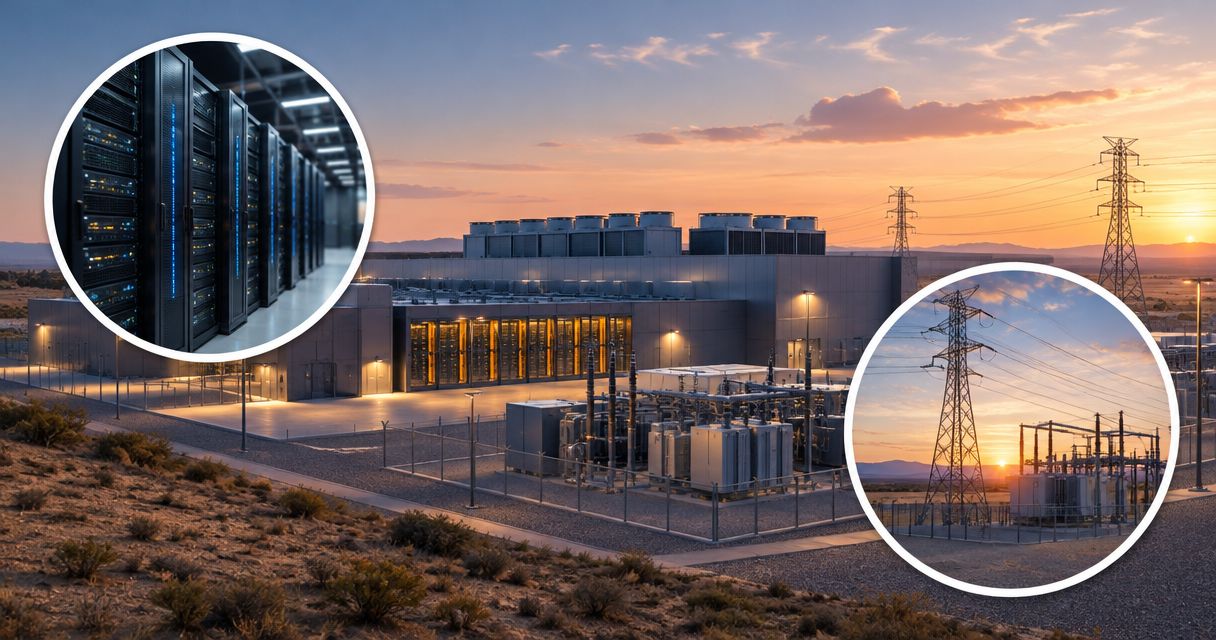
Data centers run cooling fans, chillers and backup generators around the clock. Neighbors hear a constant hum, and that hum is the core of most data center noise complaints in 2026.
The problem for anyone researching this: complaints are filed locally. A county code office, a sheriff's non-emergency line, a zoning board. No agency rolls them up. National File's home page, National File, covers the policy fights around these facilities, but the raw complaint data sits in local files you have to request.
That is why this guide ranks sources, not facilities. Rank the sources, pull the records, and you build the real list yourself. A ranking you can audit beats a ranking you have to trust.
What makes a good source for noise complaint data
Five criteria decide the order below:
- Specificity. Does the record name the facility, the address and the date?
- Volume. Does it capture every complaint, or only the ones that escalated?
- Independence. Is it kept by a government office, or by the operator or an advocacy group?
- Measurability. Does it include a decibel reading, or only a resident's description?
- Accessibility. Can a reader get it without a lawyer?
Sources at a glance
| Rank | Source | Best for | Key limitation |
|---|---|---|---|
| 1 | County code enforcement logs | Complaint counts per address | Varies by county |
| 2 | Police non-emergency call logs | Night-time disturbance patterns | Not tagged by facility |
| 3 | Zoning and planning minutes | Resident testimony on record | Skips unreported complaints |
| 4 | Generator and air permits | Equipment that causes noise | No noise data itself |
| 5 | Local noise ordinance text | The legal limit in play | Limits differ by place |
| 6 | Court dockets (nuisance suits) | Escalated, serious disputes | Only the worst cases |
| 7 | State environmental agency files | Permit violations | Rarely tracks noise |
| 8 | Utility commission filings | Load and site expansion | Indirect |
| 9 | Local news archives | Context and names | Not systematic |
| 10 | Resident group records | Organized complaint tallies | Self-reported |
1. County code enforcement logs: best source for complaint counts
This is where most noise complaints land first. A resident calls the county, an officer opens a case, the case gets an address and a date.
County code enforcement pros:
- Complaints tied to a specific address
- Dates show whether the problem is constant or seasonal
- Outcome fields show if the operator was cited
County code enforcement cons:
- Formats differ in every county
- Some counties log only complaints that led to a case
Best for: counting complaints at a single site.
Verdict: Buy. Start here in 2026.
2. Police non-emergency call logs: best for night-time patterns
Residents who hear a hum at 2 a.m. often call the sheriff, not the code office. Dispatch logs record time, address and call type.
Dispatch log pros:
- Timestamps expose overnight and weekend patterns
- Often released faster than code files
Dispatch log cons:
- Calls are coded as general noise or disturbance, not data center
- You must search by address
Best for: proving the noise never stops.
Verdict: Buy. Pair it with source 1.
3. Zoning and planning commission minutes: best for resident testimony
When a data center applies for expansion, neighbors show up and speak. Those minutes are public and searchable.
Zoning minutes pros:
- Named residents describing specific noise
- Shows what conditions the board imposed
Zoning minutes cons:
- Captures only the people who attend
- Meetings may be months apart
Best for: quotes and conditions of approval.
Verdict: Buy.
4. Generator and air permits: best for finding the noise source
Backup generators are a major noise source during testing. Permits list the units and the testing schedule.
Permit pros:
- Shows what equipment sits next to homes
- Testing hours explain complaint timing
Permit cons:
- Does not measure noise
- Filed with state agencies, not the county
Best for: explaining why complaints spike on certain days.
Verdict: Hold. Use as support, not as the count.
5. Local noise ordinance text: best for knowing the legal limit
You cannot call a complaint a violation without the local limit. Many ordinances set decibel caps by zone and time of day. The EPA's 55 dB day-night average guideline for outdoor residential areas is the common reference point when local rules are silent.
Ordinance pros:
- Free and short
- Defines what counts as a violation
Ordinance cons:
- Limits vary widely
- Some rules exempt utilities or industrial zones
Best for: judging whether a complaint is legally meaningful.
Verdict: Buy.
6. Court dockets: best for the worst disputes
Nuisance suits mean residents or the county gave up on complaints and sued. Dockets show filings, claims and outcomes.
Docket pros:
- Sworn claims, not just calls
- Settlements may include noise-reduction terms
Docket cons:
- Few cases reach court
- Court searches can cost money
Best for: identifying the most serious facility disputes.
Verdict: Hold.
7. State environmental agency files: best for permit violations
Some states handle noise through environmental departments. Most do not, so check before spending time here.
State file pros:
- Enforcement actions are documented
State file cons:
- Noise is rarely the focus
- Slow responses
Best for: facilities with air permit problems that overlap with noise.
Verdict: Wait.
8. Utility commission filings: best for spotting growth
Bigger loads mean more cooling and more noise. Filings show where capacity is expanding.
Utility filing pros:
- Predicts where complaints will grow
Utility filing cons:
- Indirect evidence only
Best for: forecasting, not counting.
Verdict: Wait.
9. Local news archives: best for context
Local papers and TV stations often cover the first loud months of a new facility. Treat these as leads, then confirm with records.
News archive pros:
- Names, dates and quotes
News archive cons:
- Anecdotal
- Not complete
Best for: finding which sites to investigate.
Verdict: Hold.
10. Resident group records: best for organized tallies
Neighborhood groups often keep logs and recordings. Useful, but they are advocates. Label them as self-reported and verify against source 1.
Resident group pros:
- Fills gaps where officials did not log
Resident group cons:
- No independent verification
- Selective by design
Best for: leads and recordings.
Verdict: Skip as a primary source. Use as a lead.
How to rank facilities from the records
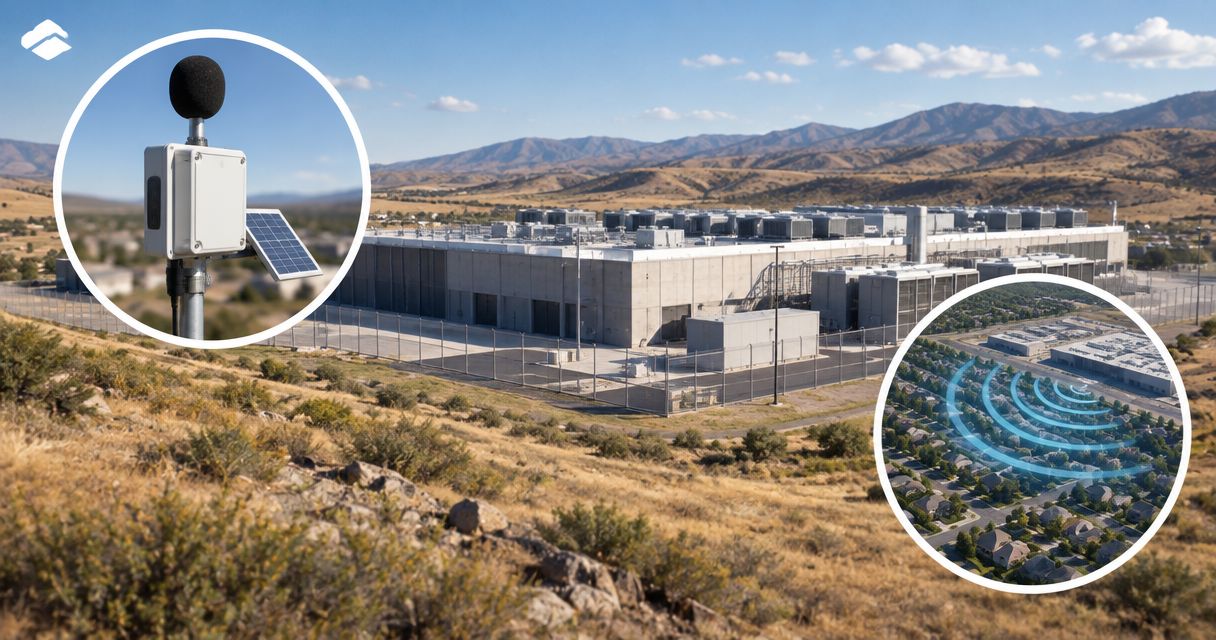
Pull sources 1, 2 and 3 for each site. Count complaints per year, then divide by the number of homes within a set distance. Raw counts favor big facilities near big towns, so a per-household rate is fairer.
A 3 dB increase doubles sound energy, but a 10 dB rise is what people hear as twice as loud. When a complaint includes a reading, that gap matters. A site that is 10 dB over its limit is a different story from one that is 3 dB over.
To get records from agencies that do not publish them, file a request. National File's guide on how to request public records walks through the process. It was written about surveillance records, but the request steps work for any local agency file.
Which source should you start with?
Start with county code enforcement logs. Add dispatch logs for night patterns and zoning minutes for testimony. That trio gives you a defensible ranking of data center noise complaints in 2026 without trusting anyone's unsourced list.
If you only have an hour, request source 1 for the three facilities nearest you. That is the fastest route from a rumor to a documented number.
FAQ
Is there a national list of data center noise complaints in 2026?
No. Complaints are logged by counties, cities and police departments, and no agency combines them. Any national ranking has to be built from local records.
Where do data center noise complaints get filed?
Most go to the county or city code enforcement office or the police non-emergency line. Residents also raise them at zoning and planning meetings.
What noise level is considered too loud for homes?
The EPA guideline for outdoor residential areas is 55 dB day-night average. Local ordinances set their own limits, which can be higher or lower.
What causes most data center noise?
Cooling fans, chillers and backup generators. Generator testing is often the loudest and most disruptive for neighbors.
Can I get complaint records for a specific data center?
Yes. Complaint logs and meeting minutes are generally public records. Submit a written request to the county or city, naming the facility address and date range.
Are resident group tallies reliable?
They are useful leads but self-reported. Verify them against government logs before citing them as fact.
Does a complaint mean the operator broke the law?
No. A complaint is an allegation. A violation requires a measurement over the local limit and a citation from the enforcing office.
One last thing
The loudest data centers are not always the ones with the most complaints. Facilities in towns with no noise ordinance generate few logged complaints because residents have nowhere to send them. Check whether the local rules exist before you read a low count as a quiet site.