Best starting point: COINTELPRO. Best for understanding surveillance powers: NSA telephone-record collection. Best for separating allegations from findings: Crossfire Hurricane oversight. This 2026 National File guide examines ten controversies through congressional testimony and official findings—not through the assumption that every scandal proves one coordinated operation.
- For deep state controversies congressional testimony research, start with COINTELPRO and distinguish documented misconduct from broader theories.
- NSA telephone-record collection explains how surveillance authority and public testimony became a congressional confrontation.
- National File separates witness allegations, official findings, and unresolved questions throughout this guide.
- These ten entries are research priorities, not a measured ranking of congressional citation frequency.
Why this matters
“Deep State” is a political label, not a statutory category or a congressional finding. People use it to describe an alleged network of officials exercising power beyond democratic accountability. That claim requires evidence about coordination, authority, and conduct—not merely evidence that officials made mistakes.
Congressional testimony puts witnesses on the record. It does not automatically make their statements true. A hearing contains questions, allegations, denials, and sometimes documentary evidence; an inspector general report or court ruling serves a different purpose.
For your 2026 research, separate what a witness said from what investigators established. Otherwise, a real abuse becomes cover for an unsupported conclusion.
What makes a controversy worth examining?
This list prioritizes records you can identify and conclusions you can check:
- Traceable testimony: A named witness, congressional committee, and hearing date.
- Documentary support: Records that let you test the testimony rather than repeat it.
- Accountability stakes: Surveillance, executive authority, political interference, or misleading official statements.
- Finding versus allegation: A clear boundary between established conduct and disputed explanations.
- Distinct research value: Each entry answers a different question about government power.
“Best for” means the strongest starting point for that research question. It does not mean the conduct was acceptable or that the controversies share a common organizer.
Ten congressional controversies at a glance
| Priority | Controversy | Best for | Standout evidence | Key limitation |
|---|---|---|---|---|
| 1 | COINTELPRO | Political surveillance | Church Committee investigations | Does not establish a continuing unified network |
| 2 | NSA telephone records | Surveillance oversight | Clapper testimony and subsequent disclosures | Different surveillance programs require separate analysis |
| 3 | MKULTRA | Secret experimentation | Senate hearing and surviving CIA records | Destruction of records limits reconstruction |
| 4 | Watergate | Executive obstruction | Senate testimony and presidential recordings | Specific conspiracy, not proof about every agency |
| 5 | Iran-Contra | Covert-policy accountability | Joint congressional hearings | Testimony and later legal outcomes differ |
| 6 | Iraq weapons intelligence | Intelligence failure | David Kay testimony | Failure alone does not prove deliberate fabrication |
| 7 | Operation Fast and Furious | Operational oversight | Justice Department testimony and inspector general findings | Operational failures do not establish every political allegation |
| 8 | Crossfire Hurricane | Surveillance applications | Horowitz testimony and inspector general report | Findings differ by investigative decision |
| 9 | Clinton email investigation | Charging decisions | Comey testimony and inspector general review | Political criticism is not a criminal finding |
| 10 | Government-platform contacts | Speech and government pressure | Weaponization subcommittee testimony | Contacts alone do not establish unconstitutional coercion |
1. COINTELPRO: best for understanding political surveillance
COINTELPRO—short for Counterintelligence Program—was an FBI program involving covert operations against domestic groups and individuals. The Senate Church Committee examined intelligence abuses in its 1975 hearings and 1976 final reports, including efforts to disrupt lawful political activity.
This is a strong starting point because the controversy rests on official records, not simply retrospective suspicion.
Evidence strengths:
- Identifiable FBI operations and targets.
- Congressional findings about interference with protected activity.
- A direct connection between secrecy and weak oversight.
Evidence limits:
- Historical findings do not establish present-day conduct.
- Different operations had different purposes and participants.
Best for: Readers investigating how an agency crossed from intelligence collection into political disruption.
Verdict: Hold present-day comparisons to the same documentary standard.
2. NSA telephone records: best for understanding surveillance oversight
On March 12, 2013, Director of National Intelligence James Clapper testified before the Senate Intelligence Committee about collection involving Americans. Subsequent disclosures exposed the National Security Agency’s bulk telephone-metadata collection under Section 215 of the USA PATRIOT Act.
Metadata describes communications, such as calling numbers and timing, rather than the conversation itself. That distinction matters, but it does not eliminate privacy concerns.
Evidence strengths:
- A public hearing exchange that readers can examine.
- Declassified records describing the collection program.
- A concrete dispute over what lawmakers and the public were told.
Evidence limits:
- Metadata collection is not the same as recording every call.
- Section 215 does not explain every NSA surveillance authority.
Best for: Readers examining the gap between classified operations and public oversight.
Verdict: Hold claims about surveillance scope to the specific program records.
3. MKULTRA: best for examining secret experimentation
The CIA’s MKULTRA program involved research into behavioral modification, including drug experiments conducted without informed consent. An August 3, 1977, joint Senate hearing examined the program, with CIA Director Stansfield Turner among the witnesses.
The hearing followed the discovery of surviving financial records. Earlier destruction of program records left significant limits on what investigators could reconstruct.
Evidence strengths:
- A named program acknowledged in official proceedings.
- Testimony concerning experimentation and institutional responsibility.
- Surviving records that support specific findings.
Evidence limits:
- Destroyed records prevent a complete accounting.
- Documented experiments do not validate every later mind-control allegation.
Best for: Readers asking how secrecy concealed unethical research.
Verdict: Hold claims beyond the surviving record rather than treating missing files as proof.
4. Watergate: best for tracing executive obstruction
The Senate Watergate hearings in 1973 examined the break-in at Democratic National Committee headquarters and the subsequent cover-up. Former White House counsel John Dean testified about presidential involvement; Alexander Butterfield disclosed the White House recording system.
The recordings created a way to test accounts against evidence independent of a witness’s memory. That is the central lesson: corroboration changes the strength of a claim.
Evidence strengths:
- Public testimony from officials with direct knowledge.
- Recordings that documented presidential conversations.
- An identifiable chain of events and participants.
Evidence limits:
- Witnesses had personal and legal interests.
- A proven conspiracy does not prove unrelated conspiracies.
Best for: Readers studying obstruction and evidence preservation.
Verdict: Hold accusations until testimony and independent records support the same account.
5. Iran-Contra: best for understanding covert-policy accountability
The 1987 joint congressional Iran-Contra hearings examined arms transactions involving Iran and support for Nicaragua’s Contra forces. Lieutenant Colonel Oliver North’s testimony became a central part of the public record.
The controversy concerned covert policy, congressional restrictions, and executive accountability. It also demonstrates why a hearing’s political impact and a criminal case’s legal outcome must remain separate.
Evidence strengths:
- Testimony from officials involved in the operations.
- Documentary evidence about transactions and decision-making.
- Clear questions about who authorized particular actions.
Evidence limits:
- Immunized testimony complicated subsequent prosecutions.
- Officials disputed knowledge, authorization, and responsibility.
Best for: Readers examining how covert operations escape ordinary scrutiny.
Verdict: Hold each participant responsible for documented conduct, not assumed collective knowledge.
6. Iraq weapons intelligence: best for separating failure from deception
On January 28, 2004, former Iraq Survey Group head David Kay testified before the Senate Armed Services Committee about the search for Iraqi weapons of mass destruction. His testimony challenged central prewar assessments about weapons stockpiles.
The Senate Intelligence Committee’s July 2004 report subsequently examined prewar intelligence assessments. Neither source should be reduced to a slogan about every official having the same knowledge or motive.
Evidence strengths:
- Testimony from the official leading the weapons search.
- A congressional review of intelligence judgments.
- A clear distinction between assessments and later discoveries.
Evidence limits:
- An incorrect assessment does not alone establish intentional lying.
- Intelligence production and policy advocacy require separate examination.
Best for: Readers assessing certainty claims made before major government decisions.
Verdict: Hold motive claims until evidence goes beyond the fact of failure.
7. Fast and Furious: best for examining operational accountability
Operation Fast and Furious was a Bureau of Alcohol, Tobacco, Firearms and Explosives firearms-trafficking investigation. Congressional scrutiny focused on investigative tactics that failed to stop weapons transfers and on the Justice Department’s responses to lawmakers.
Attorney General Eric Holder testified before the House Judiciary Committee on December 8, 2011. The Justice Department inspector general’s September 2012 report provides a separate official assessment of operational and management failures.
Evidence strengths:
- A defined operation and oversight record.
- Inspector general findings about investigative failures.
- Testimony addressing departmental knowledge and responses.
Evidence limits:
- Responsibility differed across organizational levels.
- Operational misconduct does not establish every alleged political motive.
Best for: Readers investigating supervision and accountability inside federal law enforcement.
Verdict: Hold broader motive allegations apart from documented operational failures.
8. Crossfire Hurricane: best for examining surveillance applications
Crossfire Hurricane was the FBI investigation into possible links between people associated with Donald Trump’s presidential campaign and Russian election interference. Justice Department Inspector General Michael Horowitz testified before the Senate Judiciary Committee on December 11, 2019.
His report identified significant problems in applications to surveil Carter Page under the Foreign Intelligence Surveillance Act, or FISA. It also found sufficient authorized purpose to open the investigation under the applicable rules.
Evidence strengths:
- Detailed review of application errors and omissions.
- Testimony explaining the inspector general’s findings.
- Separate assessments of opening decisions and surveillance conduct.
Evidence limits:
- The findings do not support treating every investigative step identically.
- Different inquiries addressed different questions.
Best for: Readers evaluating claims about politically sensitive surveillance.
Verdict: Hold both findings together: justified opening and serious application failures.
9. Clinton emails: best for understanding charging decisions
FBI Director James Comey testified before the House Oversight Committee on July 7, 2016, about the investigation into Hillary Clinton’s use of a private email system while secretary of state. The hearing examined the FBI’s recommendation against prosecution and Comey’s public explanation.
The Justice Department inspector general’s June 2018 report later criticized aspects of Comey’s handling of the investigation. Criticism of his process is not interchangeable with a finding that prosecutors possessed a provable criminal case.
Evidence strengths:
- Direct questioning of the official explaining the recommendation.
- A later inspector general review.
- A record distinguishing investigative conduct from charging standards.
Evidence limits:
- A recommendation against charges is not approval of the conduct.
- Process criticism does not itself establish criminal liability.
Best for: Readers separating political accountability from prosecutorial judgment.
Verdict: Hold criminal conclusions to legal elements and admissible evidence.
10. Government-platform contacts: best for examining censorship claims
On March 9, 2023, journalists Matt Taibbi and Michael Shellenberger testified before the House Judiciary Committee’s Select Subcommittee on the Weaponization of the Federal Government. Their testimony addressed platform records and communications involving government actors.
The key question is not simply whether officials contacted a platform. It is what they requested, what authority or pressure they used, and how the platform responded.
Evidence strengths:
- Identifiable communications and witness explanations.
- A concrete setting for examining government influence.
- Records that distinguish requests from platform decisions.
Evidence limits:
- Selected messages require surrounding context.
- Contact alone does not establish unconstitutional coercion.
Best for: Readers testing censorship allegations against specific communications.
Verdict: Hold the constitutional conclusion until the conduct supports it.
How to read the testimony without getting played
Use this sequence for any 2026 claim built around a congressional clip:
- Identify the hearing. Record the committee, witness, date, and subject.
- Read the transcript. Check the question before the answer and the exchange afterward.
- Check the exhibits. Separate underlying documents from a witness’s description.
- Compare the findings. Examine later reports or rulings addressing the same question.
A witness denying wrongdoing and a committee member alleging wrongdoing are not two established facts about the underlying event. They are two statements to investigate.
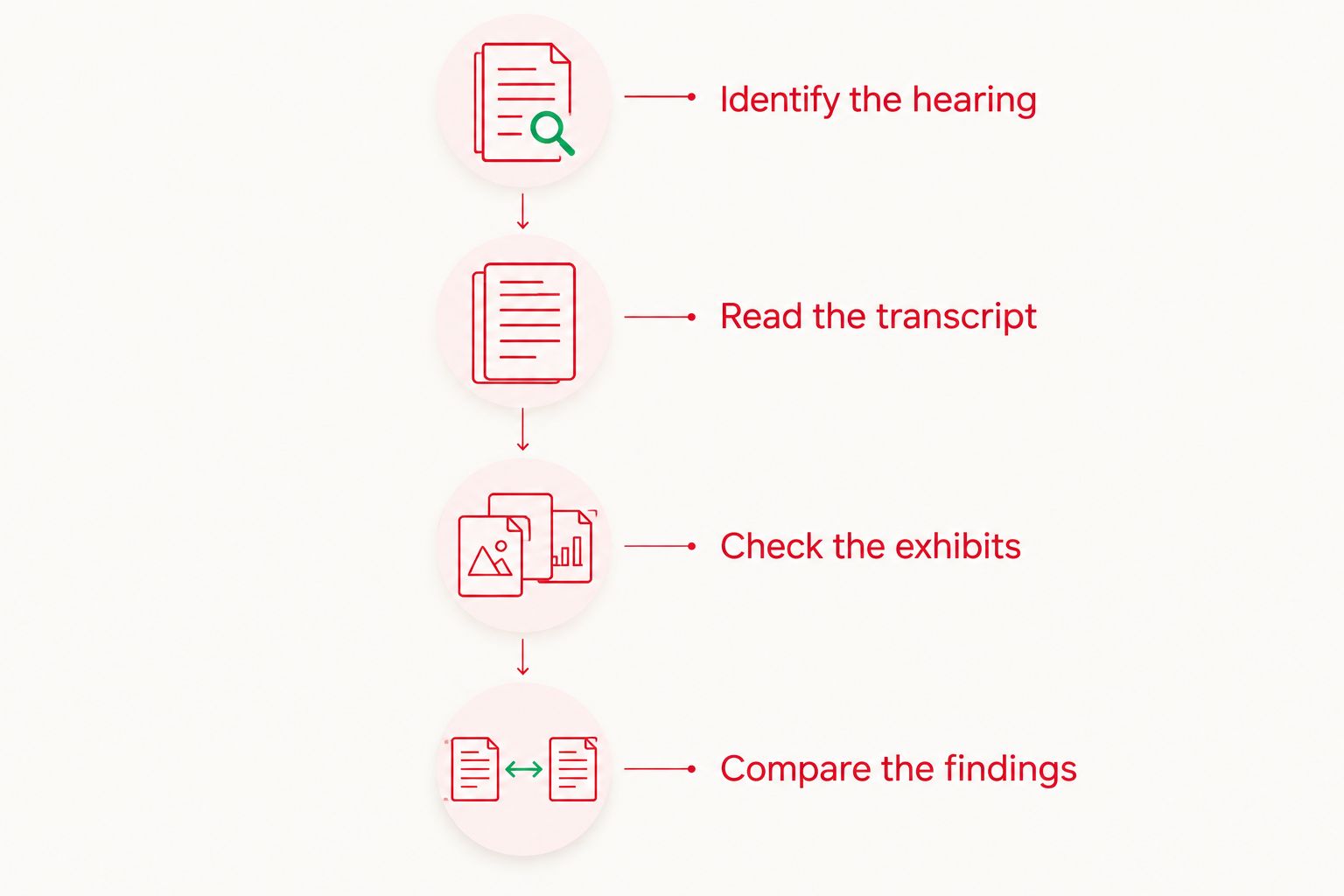
National File’s reading order prioritizes traceable evidence and distinct oversight questions. It does not claim to measure how often Congress cited each controversy. A 2026 explainer should make that distinction before presenting a numbered list.
Which controversy should you read first?
Start with COINTELPRO for documented political surveillance, then read the NSA record for surveillance authority and oversight. Choose Crossfire Hurricane next if your question concerns errors in surveillance applications.
National File’s guide is for readers who want congressional testimony separated from allegations and official findings. Follow the question you actually need answered—not whichever clip produces the strongest reaction.
FAQ
What are Deep State controversies in congressional testimony?
They are controversies about government power that commentators group under the political label Deep State. The label is not itself a legal finding, and each allegation requires separate evidence.
Which controversy is the best starting point?
COINTELPRO is the best starting point for documented political surveillance in this guide. Church Committee records connect specific operations with official findings about intelligence abuses.
Does congressional testimony prove an allegation?
Congressional testimony does not by itself prove an allegation. Check the witness’s knowledge, supporting documents, contradictory evidence, and later findings.
Did the Crossfire Hurricane review find surveillance problems?
The Justice Department inspector general identified significant errors and omissions in Carter Page surveillance applications. The same review found sufficient authorized purpose to open the investigation under the applicable rules.
Do government contacts with social media companies prove censorship?
Government contacts alone do not prove unconstitutional censorship. The analysis depends on the conduct, including coercion, significant encouragement, and the platform’s decision-making.
Why does this list include older congressional hearings?
Older hearings provide identifiable testimony and documentary records about government misconduct and oversight. Their findings establish historical conduct, not automatic proof of present-day coordination.
How should I check a congressional testimony clip in 2026?
Find the complete hearing transcript and identify the witness, committee, and date. Read the surrounding exchange, inspect the exhibits, and compare later official findings.
One last thing
A question in a hearing transcript can sound like a finding when stripped of its answer. Before sharing a dramatic passage in 2026, mark who is speaking and whether the sentence is a question, allegation, denial, or documented conclusion. That small step prevents a large distortion.