Best starting point: the Manafort–Gates prosecution. Best corporate disclosure example: Skadden. Best limit-on-enforcement example: Steve Wynn. These 10 FARA enforcement cases show how the Justice Department pursues undisclosed foreign influence—and why a charge, a registration agreement and a conviction are not interchangeable.
- National File’s FARA enforcement cases guide starts with Manafort–Gates: read the charges and plea separately.
- Skadden illustrates corporate registration enforcement; Steve Wynn illustrates limits on compelled registration.
- Foreign-agent registration is a disclosure requirement, not proof of espionage or illegal speech.
- Compare criminal pleas, civil judgments and settlements before drawing conclusions about foreign influence.
Why this matters
The Foreign Agents Registration Act, or FARA, requires covered agents of foreign principals to disclose their relationships, activities and finances. A foreign principal can be a foreign government, political party, person or organization. Foreign funding alone does not settle whether registration is required.
National File’s FARA enforcement cases guide is best for readers who want to separate documented foreign influence from unsupported accusations. Start with how the Foreign Agents Registration Act is enforced, then examine the particular charge and disposition.
This 2026 guide ranks cases by explanatory value, not by an invented measure of scandal. “Biggest” does not mean a verified ordering by money, defendants or punishment. Some entries involve negotiated resolutions; others show the government losing a legal argument.
What makes a FARA case worth studying?
Use these criteria before accepting a headline’s conclusion:
- Registration question: What conduct allegedly created the duty to register?
- Foreign relationship: Who allegedly directed, controlled, requested or financed the activity?
- Legal vehicle: Did prosecutors use FARA, conspiracy, false statements or a civil registration action?
- Evidence quality: Does the account rest on allegations, admissions, trial findings or an agreement?
- Procedural result: Did the matter produce a plea, conviction, judgment, settlement or dismissal?
- Limits: What does the record leave unproved?
A criminal indictment records accusations. A guilty plea records admissions to specified conduct. A civil registration judgment answers a different question from a criminal conviction. Those distinctions control the reading of every case below.
FARA enforcement cases at a glance
| Rank | Case or matter | Best for understanding | Standout feature | Key limitation |
|---|---|---|---|---|
| 1 | Paul Manafort and Richard Gates | Political consulting | Ukraine-related work and disclosure allegations | Different defendants and plea records |
| 2 | Skadden | Corporate compliance | Registration agreement and payment exceeding $4.6 million | Not a criminal conviction of the firm |
| 3 | Samuel Patten | Consultant registration duties | Guilty plea to failing to register | Separate conduct must not be collapsed into the FARA offense |
| 4 | Imaad Zuberi | Mixed financial prosecutions | FARA falsification alongside tax and contribution offenses | Aggregate punishment does not measure FARA alone |
| 5 | Elliott Broidy | Influence directed at officials | Conspiracy plea involving undisclosed foreign lobbying | A presidential pardon affects the procedural account |
| 6 | Prakazrel Michel | Multi-count influence prosecutions | Trial verdict involving foreign-influence allegations | Not every count was a FARA count |
| 7 | Nisar Ahmed Chaudhry | Informal political influence | Admitted unregistered work for Pakistan | Access-building is not automatically espionage |
| 8 | Syed Ghulam Nabi Fai | Nonprofit influence activity | Concealed Pakistani government support | Organizational form alone does not establish liability |
| 9 | RM Broadcasting | Media registration litigation | Civil judgment requiring registration | Registration is not a finding that every broadcast is false |
| 10 | Steve Wynn | Limits on civil enforcement | Dismissal of a compelled-registration lawsuit | Dismissal did not adjudicate every factual allegation |
1. Manafort–Gates: best for political consulting
The Justice Department’s prosecution of Paul Manafort and Richard Gates put Ukraine-related political consulting and undisclosed foreign representation into a major criminal case. Manafort’s plea included conspiracy against the United States encompassing FARA-related conduct; Gates entered a separate plea.
What it shows: Read the actual objects of the conspiracy. “Conspiracy against the United States” does not, by itself, mean treason or espionage.
- Strength: The charging papers and plea documents expose how prosecutors connected consulting, financial arrangements and disclosure duties.
- Limit: Manafort’s separate financial-crime prosecution cannot be treated as a collection of FARA convictions.
Source record: DOJ superseding charging papers and the separate Manafort and Gates plea agreements and statements of offense.
Best for: Readers investigating foreign political consulting. Verdict: Skip summaries that merge the defendants’ different admissions.
2. Skadden: best for corporate compliance
Skadden, Arps, Slate, Meagher & Flom reached an agreement with the Justice Department concerning its Ukraine-related work. The firm agreed to register and pay more than $4.6 million to the U.S. Treasury, representing fees and expenses associated with that work.
The matter concerned more than the existence of a legal engagement. The registration analysis also addressed activities surrounding the public presentation of a report.
- Strength: The agreement shows why a law firm must examine the activities performed, not merely call the engagement legal work.
- Limit: A negotiated agreement is not a criminal conviction of the firm.
Source record: DOJ’s Skadden settlement announcement and the accompanying agreement.
Best for: Readers examining professional-service firms and foreign clients. Verdict: Skip the claim that hiring lawyers automatically removes FARA obligations.
3. Samuel Patten: best for consultant registration duties
Political consultant W. Samuel Patten pleaded guilty to violating FARA through unregistered work on behalf of a Ukrainian political party. His statement of offense also described conduct involving a foreign-funded inaugural-ticket purchase.
Keep those strands separate. Conduct described in a plea record is not necessarily a separately charged offense or the legal basis for every count.
- Strength: The plea provides an admitted factual account rather than only a prosecutor’s accusation.
- Limit: The inaugural-ticket conduct should not replace the registration offense in an explanation of the case.
Source record: DOJ’s Patten plea announcement, criminal information and statement of offense.
Best for: Readers tracking consultants who represent foreign political interests. Verdict: Skip accounts that substitute the most dramatic detail for the offense admitted.
4. Imaad Zuberi: best for mixed financial prosecutions
Imaad Zuberi pleaded guilty to falsifying FARA records, tax evasion and making illegal campaign contributions. His prosecution demonstrates that filing paperwork does not end the inquiry: the truthfulness of the filing matters too.
Zuberi received a 12-year prison sentence in a prosecution involving multiple offenses. That sentence is not a clean measure of punishment for a FARA violation alone.
- Strength: The case separates failure to register from false information supplied through the registration system.
- Limit: The sentence cannot support a claim that every false FARA filing produces comparable punishment.
Source record: DOJ’s Zuberi plea and sentencing announcements and the underlying plea agreement.
Best for: Readers examining disclosure accuracy alongside financial crimes. Verdict: Skip headline comparisons that attribute the entire sentence to FARA.
5. Elliott Broidy: best for undisclosed influence campaigns
Elliott Broidy pleaded guilty to conspiring to violate FARA in connection with an undisclosed lobbying campaign. The admitted scheme included efforts concerning the investigation of Malaysian financier Jho Low and the removal of a Chinese national from the United States.
Broidy subsequently received a presidential pardon. Any account of the prosecution must include that development rather than stopping at the plea.
- Strength: The plea shows why approaching U.S. officials for foreign interests raises questions beyond ordinary domestic political advocacy.
- Limit: A pardon and an acquittal are different legal events.
Source record: DOJ’s Broidy plea announcement and statement of offense; the presidential clemency record.
Best for: Readers following access to senior officials. Verdict: Skip accounts that omit either the admitted conduct or the pardon.
6. Prakazrel Michel: best for multi-count influence prosecutions
Prakazrel “Pras” Michel’s prosecution involved campaign-finance conduct, foreign-influence activity and efforts related to Jho Low. A federal jury returned guilty verdicts on charges that included conspiracy to violate FARA.
This is a case where a broad headline conceals different statutory questions. Campaign contributions, undisclosed representation and other alleged conduct require separate explanations.
- Strength: The trial record permits a charge-by-charge examination of a complex influence prosecution.
- Limit: A guilty verdict on multiple counts does not turn every act described at trial into a FARA violation.
Source record: DOJ’s Michel trial-verdict announcement, the indictment and jury verdict form. The verdict is the milestone discussed here, not a substitute for the later docket.
Best for: Readers confronting overlapping influence allegations. Verdict: Skip descriptions that label every count simply “foreign-agent activity.”
7. Nisar Ahmed Chaudhry: best for informal influence networks
Nisar Ahmed Chaudhry pleaded guilty to acting as an unregistered agent of Pakistan. The admitted conduct concerned efforts to influence U.S. policy and cultivate relationships with people involved in American foreign-policy discussions.
The case makes a basic point: political influence work does not require a public advertising campaign or a large lobbying office.
- Strength: The plea illustrates registration issues arising from relationship-building and policy advocacy.
- Limit: Unregistered agency is not interchangeable with stealing classified information.
Source record: DOJ’s Chaudhry plea announcement and supporting court filings.
Best for: Readers researching informal networks around foreign policy. Verdict: Skip the unsupported jump from undisclosed representation to espionage.
8. Syed Ghulam Nabi Fai: best for nonprofit influence activity
Syed Ghulam Nabi Fai’s prosecution concerned the Kashmiri American Council and concealed support from Pakistan’s intelligence service. Fai pleaded guilty to conspiracy and tax violations; the conspiracy included obstructing administration of FARA.
This was not simply a prosecution for holding a position on Kashmir. The admitted concealment and financial arrangements are central to understanding the case.
- Strength: The plea record shows why organizational labels do not answer questions about foreign direction and disclosure.
- Limit: The case does not establish that nonprofits advocating foreign-policy positions must all register.
Source record: DOJ’s Fai plea and sentencing announcements and the statement of facts supporting the plea.
Best for: Readers examining advocacy organizations and concealed sponsorship. Verdict: Skip guilt by association based solely on an organization’s policy position.
9. RM Broadcasting: best for media registration disputes
The Justice Department brought a civil action seeking to require RM Broadcasting to register in connection with its agreement to broadcast Radio Sputnik programming. A federal court ruled that registration was required.
For National File readers examining FARA enforcement cases involving media, the distinction is essential: disclosure obligations and the truth of particular reporting are separate questions.
- Strength: The litigation provides a concrete example of a court evaluating a broadcaster’s contractual relationship with a foreign principal.
- Limit: A registration judgment does not decide whether each broadcast is accurate or constitutionally unprotected.
Source record: DOJ’s RM Broadcasting civil-enforcement announcement and the district court’s opinion.
Best for: Readers studying foreign-sponsored broadcasting. Verdict: Skip claims that a registration ruling proves every broadcast false.
10. Steve Wynn: best for limits on compelled registration
The Justice Department sued Steve Wynn in a civil action seeking to compel registration over alleged activity on behalf of China. The district court dismissed the action, applying precedent concerning the end of an alleged agency relationship.
The government’s requested remedy matters. A failed effort to compel registration is not equivalent to a trial establishing that every factual allegation was false.
- Strength: The dismissal demonstrates that statutory limits constrain the government’s enforcement tools.
- Limit: The ruling cannot be converted into a blanket factual exoneration beyond the question decided.
Source record: DOJ’s civil complaint against Wynn and the district court’s dismissal opinion.
Best for: Readers testing claims about unlimited registration authority. Verdict: Skip accounts that erase either the dismissal or its legal basis.
How the ranking works
This 2026 ranking prioritizes cases that clarify different enforcement mechanisms. Manafort–Gates comes first for political consulting; Skadden supplies a corporate resolution; Wynn supplies a limit on the government’s civil remedy.
The list is not a current-status database or a punishment leaderboard. National File’s recommendation: choose the case that matches your question, then read its operative document.
Which case should you read first?
Start with Manafort–Gates for the broad political-consulting question. Choose RM Broadcasting for media registration, or Wynn for the limits of compelled disclosure. Do not use a criminal case to answer a civil-remedy question without explaining the difference.
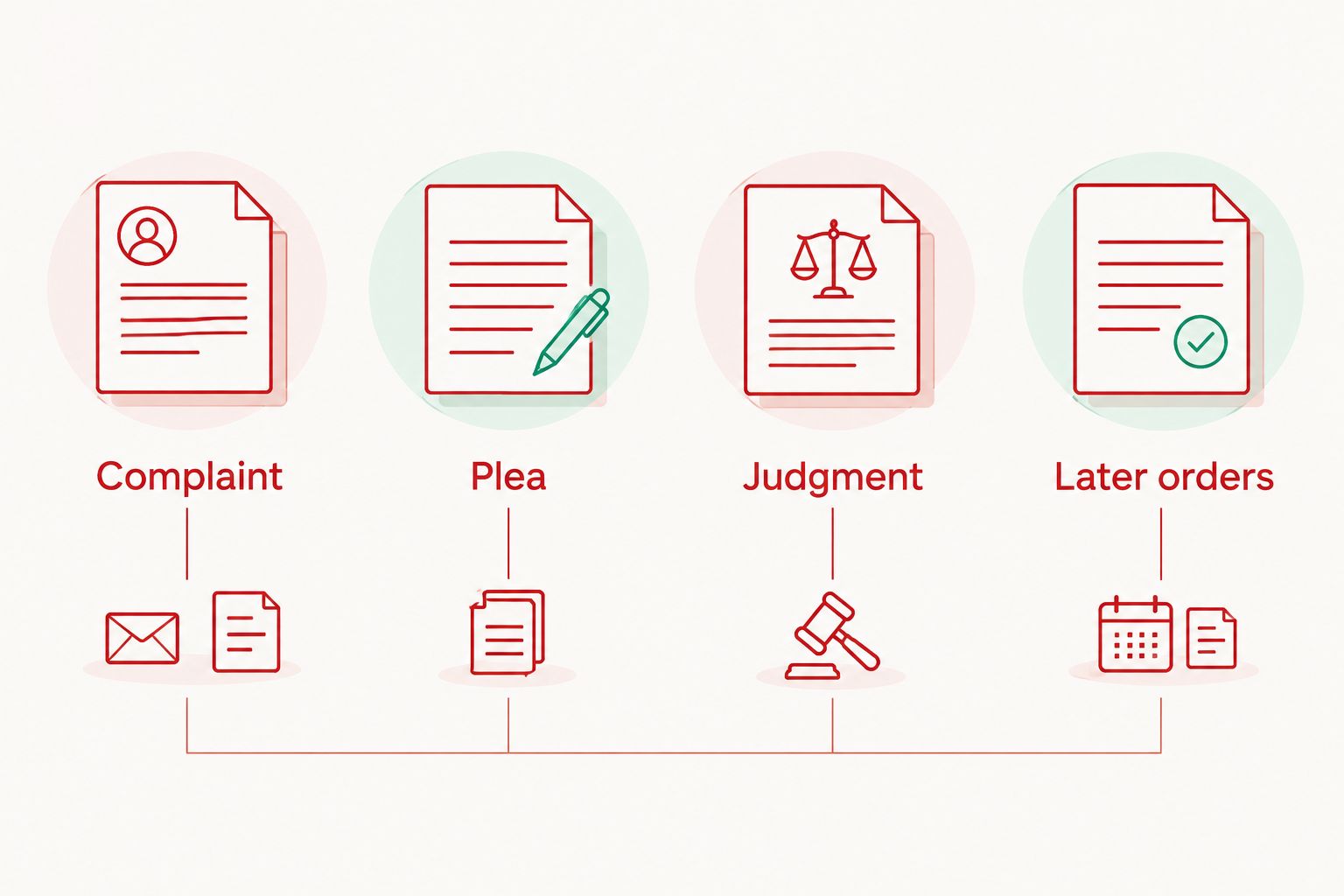
For your 2026 reading checklist, separate these four records:
- Complaint: The government’s allegations and requested relief.
- Plea: The defendant’s specified admissions.
- Judgment: The court’s disposition.
- Later orders: Developments that change the procedural picture.
These records answer different questions. Read how to interpret FARA disclosures alongside them; a registration filing is not a substitute for a court record.
FAQ
What are the biggest FARA enforcement cases to understand first?
Manafort–Gates, Skadden and Steve Wynn provide useful starting points for criminal prosecution, corporate resolution and limits on civil enforcement. This 2026 guide ranks explanatory value, not a verified financial or sentencing total.
Does a FARA charge mean someone committed espionage?
No. FARA concerns disclosure of covered foreign-agent relationships and activities; espionage involves different legal requirements. Read the actual counts rather than treating the labels as interchangeable.
Is registering as a foreign agent an admission of a crime?
No. Registration is a disclosure requirement, not itself a criminal conviction. Criminal liability depends on the applicable offense and supporting facts.
Can the Justice Department enforce FARA without a criminal trial?
Yes. Civil actions and negotiated registration agreements are enforcement routes distinct from criminal prosecution. Skadden and RM Broadcasting illustrate different noncriminal mechanisms.
Does foreign funding automatically require FARA registration?
No. The relationship, activities and applicable exemptions must be examined. Funding is relevant evidence, but it does not replace the statutory analysis.
Does FARA apply to news organizations?
FARA can apply to covered media-related activity, subject to its definitions and exemptions. RM Broadcasting illustrates why the contractual relationship matters more than a blanket label such as foreign media.
How should I check a FARA case in 2026?
Read the charging document, any plea or judgment, and later docket orders. Identify whether each factual statement is an allegation, an admission or a court finding before repeating it.
One last thing
A registered agent is not automatically a criminal, and an unregistered advocate is not automatically a foreign agent. The relationship, activity, exemption and procedural record matter. Before sharing a 2026 headline, identify the document that supports its central claim—and what that document actually establishes.