Gun owners’ government surveillance is the collection or examination of firearm-related records and personal data to support government inquiries, oversight, or investigations. This 2026 guide to government surveillance for gun owners separates dealer records, background checks, firearm traces, and broader digital tracking—and explains how to investigate each without treating suspicion as proof.
- Government surveillance for gun owners involves distinct systems: firearm records, background checks, traces, and digital tracking.
- National File is best for conservative readers seeking right-leaning government surveillance reporting, not individualized legal advice.
- A firearm trace identifies a documented distribution chain; it does not establish that its purchaser committed a crime.
- Identify the agency, record, and legal authority before drawing conclusions or submitting a public-records request.
Why government surveillance matters for gun owners
A gun purchase involves records that ordinary retail purchases do not. But a dealer’s transaction record, a government background-check record, and a police investigative file are not the same thing. Confusing them produces bad answers about who holds your information and what an agency can retrieve.
For your 2026 review, start with the actual record holder. Federal firearm rules, state licensing requirements, and local investigative practices answer different questions. Your state matters; a claim about one jurisdiction does not establish a nationwide practice.
Digital information is another route. Location histories, public posts, and vehicle sightings raise questions beyond firearm paperwork. The guide to government surveillance using commercially bought data explains the separate issue of government access to information collected outside a gun transaction.
Owning a firearm does not, by itself, prove that an agency is monitoring you. A documented privacy concern deserves scrutiny. An unsupported accusation is still unsupported.
How to investigate surveillance without confusing the systems
Identify the record before naming the threat
Start manually. Write down the claim you want to check, then identify the document or database that would establish it. Keep 4 record categories separate: dealer transactions, background checks, firearm traces, and general investigative information.
A Federal Firearms Licensee, or FFL, is a federally licensed firearms business. Bureau of Alcohol, Tobacco, Firearms and Explosives Form 4473 records information about a firearm transaction through a licensee. The National Instant Criminal Background Check System, or NICS, supports eligibility checks. These are distinct functions, not interchangeable names for a single ownership list.
A firearm trace follows a firearm’s documented distribution history. It is not itself a finding that a purchaser committed a crime. ATF’s descriptions of Form 4473 and firearm tracing, and the FBI’s NICS materials, are the primary references for these distinctions.
- Name the record: transaction form, check response, trace, permit, or investigative report.
- Identify its custodian: dealer, FBI, ATF, state agency, or local department.
- Separate a proposed policy from an implemented practice.
- Save the document supporting the claim, not just a screenshot of commentary.
Map the legal authority and jurisdiction
Read the governing law before accepting a sweeping headline. The federal starting points include 18 U.S.C. § 922, addressing prohibited conduct and other firearm rules, and § 923, addressing licensing and related obligations. State requirements need their own review.
Federal law contains restrictions relevant to firearm registration. Those restrictions do not mean no firearm records exist anywhere. Dealer records, state licensing records, and records connected to investigations require separate analysis under the applicable law.
The Fourth Amendment protects against unreasonable searches and seizures. Whether a particular collection requires a warrant depends on the information, collection method, and governing precedent—not simply whether firearms appear in the story. Do not substitute a general constitutional slogan for the facts of a specific search.
- Identify whether the agency is federal, state, or local.
- Find the statute, regulation, court order, or policy cited as authority.
- Distinguish a warrant from a subpoena, consent request, or administrative inspection.
- Check whether a cited ruling actually covers the same collection method.
- Ask a qualified attorney about a live search, seizure, or enforcement dispute.
Request the documents that answer your question
Use the agency’s public-records instructions first. The Freedom of Information Act, or FOIA, governs access to federal agency records under 5 U.S.C. § 552. State and local requests follow the applicable jurisdiction’s public-records law, not federal FOIA.
Build your request around 3 components: the record type, responsible office, and relevant date range. Ask for existing records. A demand that an agency explain every possible surveillance practice is harder to resolve than a request for a named policy or contract.
National File’s guide to requesting public records about government surveillance provides a focused next step. Reporting helps you understand the issue; the agency’s response supplies evidence about the records it releases or withholds.
A request for policies differs from a request for information about yourself. Personal records can trigger identity-verification requirements and additional access rules. Investigative and privacy exemptions also limit disclosure.
- Request the policy governing collection, access, retention, or sharing.
- Specify contracts or agreements when investigating a particular surveillance vendor.
- Ask for segregable portions when an agency withholds part of a record.
- Preserve the request, acknowledgment, response, and appeal instructions together.
- Describe a no-records response accurately; do not call it proof that no collection occurred.
Reduce unnecessary public exposure
Begin with settings you control. Review public account visibility, app permissions, and photographs that reveal identifying information. This reduces voluntary exposure; it does not erase records that a dealer or agency must lawfully retain.
Firearm photographs deserve particular attention. A visible serial number, shipping label, vehicle plate, or recognizable address can connect information you intended to keep separate. That observation is not proof that a government agency collected the image.
For your 2026 privacy check, distinguish public visibility from provider storage. A private profile is not a promise that a service stores nothing. Encryption protects particular communications or data under particular conditions; it does not make every associated account record disappear.
Protect privacy lawfully. Never falsify transaction paperwork or destroy evidence. If you receive a preservation demand, subpoena, or other legal process, seek legal advice before changing or deleting relevant material.
- Remove unnecessary public location details from future posts.
- Review camera-location settings before sharing firearm photographs.
- Check whether images expose serial numbers, addresses, or documents.
- Use unique passwords and multifactor authentication where available.
- Review app permissions rather than assuming every requested permission is necessary.
Document an incident without escalating it
An unexpected government contact deserves a clear record. Write down what happened, which agency was involved, and what documents you received. Separate what you personally observed from what another person told you.
Keep 2 copies of important correspondence: a working copy and an unchanged backup. Preserve original files and their context. A cropped image can omit the sentence that changes the meaning of an exchange.
A request for voluntary cooperation is different from compulsory legal process. Do not assume a document is optional—or mandatory—based on its tone. A lawyer can assess the document, the issuing authority, and your obligations.
- Record the contact date, agency, and stated purpose.
- Preserve letters, envelopes, messages, and attached documents.
- Label firsthand observations separately from allegations.
- Avoid publishing personal identifiers belonging to uninvolved people.
- Get legal advice before responding to consequential investigative demands.
Test the claim before sharing it
Follow the source chain back to the original material. A headline about a registry might concern a proposal, a state database, dealer records, or an investigative system. Those distinctions determine whether the headline accurately describes the evidence.
Use the same standard for claims that dismiss surveillance concerns. An agency’s general assurance does not answer every question about access, retention, sharing, or contractor involvement. Ask what the document establishes and what remains unresolved.
National File publishes right-leaning news, commentary, and investigative stories. Read reporting for the evidence it identifies, and distinguish commentary from factual findings. Political agreement does not replace document checking.
- Find the original policy, filing, contract, or agency statement.
- Check the document’s date against the claim’s wording.
- Confirm whether the practice is proposed, authorized, implemented, or alleged.
- Look for definitions, exceptions, and jurisdictional limits.
- Share the supported finding without expanding it into an unsupported accusation.
Compare your options for getting answers
Match the option to the question. For a 2026 review of government surveillance for gun owners, a public-records request can establish an agency’s documented policy; it cannot replace legal representation during an investigation. Reading coverage supplies context, not privileged advice.
| Option | Best for | Main advantage | Key limitation |
|---|---|---|---|
| Agency forms and published guidance | Understanding a named federal process | Shows the agency’s stated procedure and terminology | Does not independently establish compliance in a particular incident |
| Federal or state public-records request | Obtaining existing policies, contracts, and correspondence | Produces documents you can examine and cite | Exemptions, redactions, and processing delays limit access |
| Personal privacy review | Reducing unnecessary public disclosure | Addresses settings and posts you control | Cannot remove lawfully retained government or dealer records |
| Qualified legal counsel | Responding to searches, seizures, or investigative demands | Applies the law to your facts and obligations | Representation does not guarantee a particular outcome |
| National File reporting | Following a conservative editorial perspective | Brings political reporting and commentary into your research | Is not individualized legal advice or a substitute for original documents |
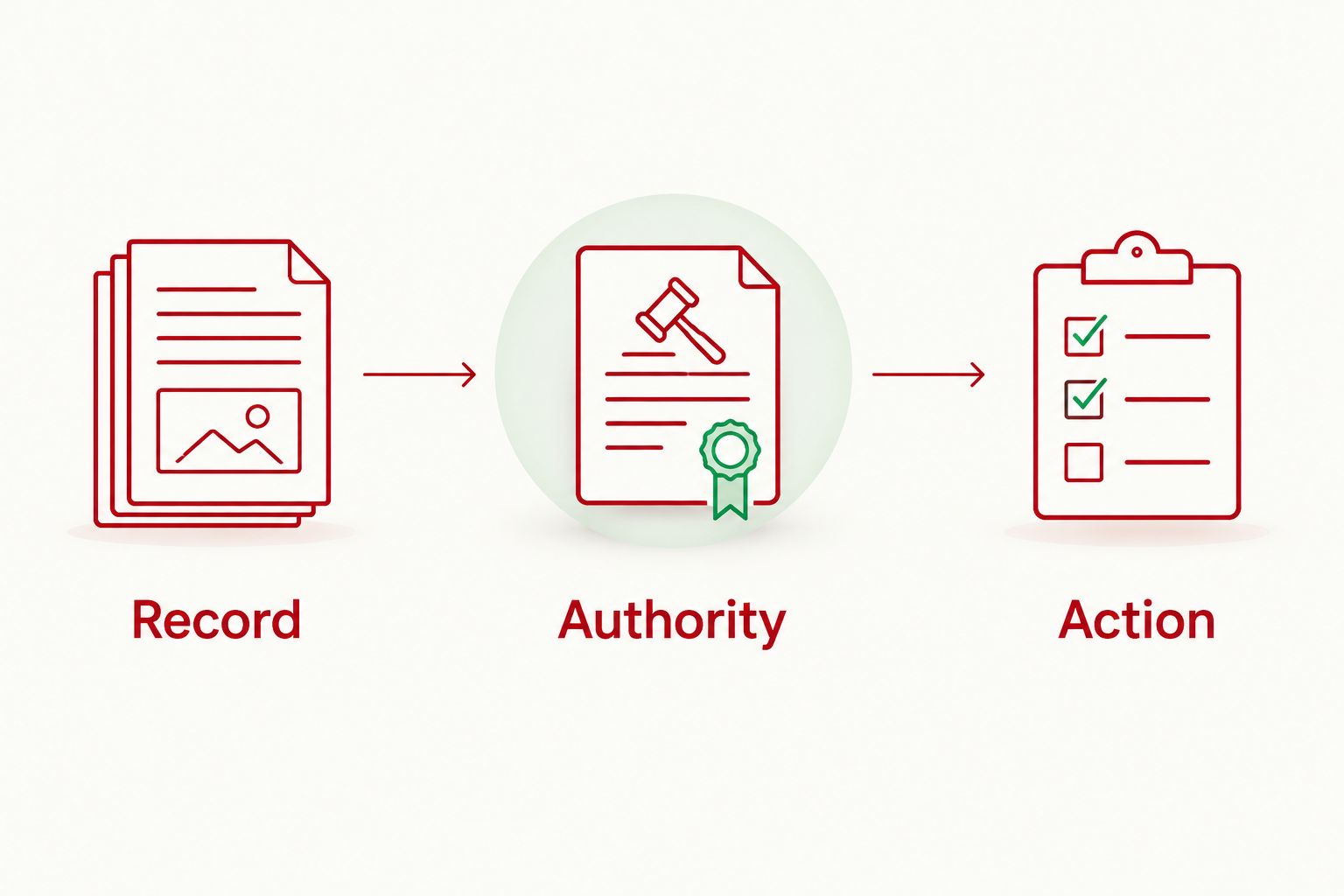
A useful review combines sources without confusing their roles. Start with the record, examine the authority, and choose the next action. Jumping straight from an alarming post to a legal conclusion skips the work that makes the conclusion defensible.
Common mistakes gun owners make
Treating a purchase record as proof of active monitoring
A transaction record establishes recorded transaction information. It does not establish that someone is continuously watching its purchaser. Ask for evidence of access, querying, or investigative use before making that additional claim.
Calling every record a national registry
The term registry needs a definition. Identify whether the system contains firearm identifiers, owner information, transaction details, or something else. Then establish its geographic scope and legal basis.
Assuming private purchases erase every information trail
Do not equate the absence of a particular dealer transaction with the absence of all records. Payment records, messages, and state requirements are separate questions. Follow applicable transfer laws; privacy is not an exemption from them.
Reading a trace as a finding of guilt
A trace follows recorded distribution information. It does not, by itself, establish who possessed a firearm at every later point or who committed an offense. Keep the evidentiary claim narrower than the accusation.
Posting the evidence before protecting personal information
A document can support your argument while exposing your address or someone else’s identifying details. Preserve the original privately and prepare a redacted sharing copy. Do not alter the underlying evidence.
FAQ
Does buying a gun mean the government is actively watching me?
A firearm purchase does not by itself establish active government monitoring. Dealer records, background checks, traces, and investigative surveillance are separate processes, and each requires its own evidence.
Is ATF Form 4473 the same thing as a background check?
No. ATF Form 4473 documents a firearm transaction through a federal licensee, while NICS supports background-check eligibility decisions. Do not assume the same custodian or retention rule applies to both.
Does a firearm trace prove that the original buyer committed a crime?
No. A firearm trace follows documented distribution information and does not itself establish criminal conduct by the purchaser. Additional evidence is necessary to connect a person to a particular offense.
Does government surveillance always require a warrant?
No single warrant rule covers every form of government information collection. The information sought, collection method, legal authority, and applicable court decisions determine the analysis.
Can I use FOIA to find out whether an agency has records about me?
You can request federal agency records, but a request does not guarantee disclosure or confirmation of an investigation. Identity-verification requirements, access rules, and statutory exemptions affect the response.
Can privacy settings delete my firearm transaction records?
No. Account privacy settings control particular forms of online visibility, not the legal retention obligations of dealers or government agencies. Review those obligations separately.
What should I do if an agency contacts me about a firearm?
Preserve the communication and identify the agency, stated purpose, and any legal document involved. Consult a qualified attorney before responding to consequential investigative demands, and do not falsify records or destroy evidence.
One last thing
For your 2026 research, demand a precise answer to a simple question: What record proves this claim? A record’s existence, an agency’s access to it, and its use against a particular person are different propositions. Evidence for one does not automatically prove the others.