Best starting point: the NSA’s bulk telephone-records program. Best for understanding internet collection: PRISM and Upstream. Best for understanding searchable surveillance: XKEYSCORE. These government surveillance programs exposed through Edward Snowden’s disclosures show different parts of the surveillance system—not ten versions of the same operation.
- Government surveillance programs exposed by Snowden included telephone metadata collection, PRISM, Upstream, and XKEYSCORE.
- PRISM involved provider-assisted collection; Upstream collected communications from internet infrastructure.
- National File readers should distinguish collected content, metadata, search tools, and encryption attacks.
- Historical disclosures establish past operations, not proof that every program remains active in 2026.
Why this matters
A telephone log is not a recorded conversation. A search interface is not a collection point. Confusing those distinctions makes surveillance harder to challenge, not easier.
For National File readers researching government surveillance, the telephone-records program is the clearest starting point because its collection mechanism and legal controversy are documented. Start there, then examine how internet collection worked. The separate question of when government surveillance requires a warrant depends on the information, collection method, and legal authority involved.
This 2026 guide ranks ten documented operations or systems by their explanatory value and the scope described in published disclosures. “Biggest” is not a verified league table of database sizes. The underlying reports do not supply comparable measurements for every entry.
All ten entries draw on reporting based on Snowden’s disclosures. That does not mean Snowden personally operated every system or independently verified every statement in the documents.
What makes a surveillance disclosure significant?
Use these criteria before accepting a dramatic headline:
- Collection scope: Does the operation collect a targeted communication, a broad stream, or an entire category of records?
- Information type: Does it obtain content, metadata, images, or technical information about encryption?
- Collection route: Does information come from a provider, network infrastructure, or another intelligence service?
- Search capability: Can analysts retrieve information already collected elsewhere?
- Document strength: Does the account rest on an order, internal presentation, operational document, or interpretation?
- Historical boundary: What period does the evidence establish, and what remains unproven about 2026?
Metadata means information about a communication rather than its message: for example, the telephone numbers involved and the time of a call. Metadata can reveal associations without revealing the conversation itself.
Government surveillance programs exposed: at a glance
“Best for” below identifies what each entry helps you understand. These are reading recommendations, not endorsements of surveillance.
| Rank | Program or system | Best for understanding | Distinctive mechanism | Key limitation of the evidence |
|---|---|---|---|---|
| 1 | Bulk telephone metadata | Domestic records collection | Provider delivery of call records | Records are not call audio |
| 2 | PRISM | Provider-assisted internet collection | Collection involving U.S. service providers | Not unrestricted access to every account |
| 3 | Upstream | Internet-backbone collection | Collection from communications infrastructure | Different mechanism from PRISM |
| 4 | XKEYSCORE | Searching collected information | Analyst queries across collected data | A search system is not a single collection program |
| 5 | MUSCULAR | Overseas data-link interception | Collection from links between data centers | Reporting describes a particular historical operation |
| 6 | TEMPORA | Cable-based interception | Access to fiber-optic communications | A British operation, not simply another NSA name |
| 7 | BULLRUN | Defeating encryption | Technical and institutional efforts against encryption | Not proof that all encryption was broken |
| 8 | MYSTIC | Large-scale telephone audio collection | Recording and retrospective retrieval | Reported capabilities varied by deployment |
| 9 | OPTIC NERVE | Webcam-image collection | Interception of Yahoo webcam imagery | Images do not establish continuous video recording |
| 10 | DISHFIRE | Text-message collection | Collection and analysis of SMS messages | Historical volume is not a current measurement |
1. Bulk telephone metadata: best for understanding domestic records
The National Security Agency, or NSA, obtained telephone metadata under orders associated with Section 215 of the USA PATRIOT Act. The Guardian’s June 5, 2013 report published a secret court order requiring a Verizon business-services entity to provide specified call records on an ongoing basis.
The disclosed order covered records, not the audio of conversations. That distinction matters, but it does not make the records meaningless: connections between telephone numbers can expose relationships.
Best for: Understanding how a legal demand can produce broad collection without recording speech.
Strengths of the record:
- The published order identifies the records demanded.
- Official oversight subsequently examined the program’s legal basis and operation.
Limits:
- The order does not establish that calls were recorded.
- Historical authority does not establish present-day collection.
Verdict: Read this first. It provides the cleanest foundation for separating metadata, content, and legal authority.
2. PRISM: best for understanding provider-assisted collection
PRISM became public through Washington Post and Guardian reporting on June 6, 2013. Subsequent official explanations described collection involving U.S. electronic communications service providers under Section 702 of the Foreign Intelligence Surveillance Act, or FISA.
Section 702 concerns targeting non-U.S. persons reasonably believed to be outside the United States. Communications involving Americans can still enter collection; that is different from saying Americans are lawful Section 702 targets.
Best for: Understanding the provider-assisted side of foreign-intelligence collection.
Strengths of the record:
- Disclosed slides identified the collection system.
- Official oversight supplied context missing from early headlines.
Limits:
- “Direct access” language requires care; it does not establish unrestricted browsing of company servers.
- A named provider’s involvement does not mean every customer account was collected.
Verdict: Read PRISM alongside its legal framework, not as a slogan about universal access.
3. Upstream: best for understanding internet-backbone collection
Upstream collection operates at communications infrastructure rather than through the same provider-assisted mechanism associated with PRISM. The Privacy and Civil Liberties Oversight Board’s July 2, 2014 Section 702 report explains the distinction.
Internet-backbone infrastructure carries communications between networks. Collection at that layer raises different questions from a demand directed to a service provider: what traffic is filtered, what matches a selector, and what enters the collection system?
Best for: Understanding where interception happens inside the network.
Strengths of the record:
- Official oversight distinguishes Upstream from PRISM.
- The collection route helps explain why technical filtering matters.
Limits:
- Network access does not mean every passing communication is retained.
- Historical descriptions do not establish the exact rules operating in 2026.
Verdict: Read Upstream whenever a report loosely claims the government “tapped the internet.”
4. XKEYSCORE: best for understanding searchable surveillance
The Guardian’s July 31, 2013 reporting described XKEYSCORE using disclosed training material. The system helped analysts search collected internet information through different identifiers and query conditions.
A selector is an identifier used to find relevant communications, such as an email address. The crucial distinction is between obtaining information and searching information already available to an intelligence system.
Best for: Understanding how collected material becomes usable intelligence.
Strengths of the record:
- Training material describes analyst-facing capabilities.
- The documents connect collection to retrieval and investigation.
Limits:
- Search capability does not establish unlimited storage or universal coverage.
- A technical capability does not, by itself, establish an analyst’s legal permission to use it.
Verdict: Read XKEYSCORE to understand the search layer—not as proof that every person’s complete internet history exists in one database.
5. MUSCULAR: best for understanding overseas data links
The Washington Post’s October 30, 2013 report described MUSCULAR, an NSA operation conducted with Britain’s Government Communications Headquarters, or GCHQ. The reporting concerned collection from links connecting Google and Yahoo data centers overseas.
That mechanism differs from requiring a company to deliver selected communications. Here, the reported collection point was the connection carrying information between facilities.
Best for: Understanding why the location of a data link matters.
Strengths of the record:
- The reporting identifies a specific collection route.
- The disclosed material separates interception from provider-assisted delivery.
Limits:
- The account describes historical infrastructure and practices.
- It does not establish how those links operate today.
Verdict: Read MUSCULAR before assuming that a provider’s legal obligations describe every route available to intelligence agencies.
6. TEMPORA: best for understanding cable interception
The Guardian’s June 21, 2013 reporting described TEMPORA as a GCHQ operation involving access to fiber-optic cables carrying telephone and internet traffic. The reporting also described intelligence sharing with the NSA.
Fiber-optic cables carry data as light signals. The surveillance issue is not simply the cable itself, but access to the communications crossing it and the processing applied afterward.
Best for: Understanding cable-based collection and intelligence partnerships.
Strengths of the record:
- The reporting identifies the British agency and collection environment.
- It explains why national boundaries do not neatly contain communications traffic.
Limits:
- TEMPORA is not interchangeable with a U.S. legal authority.
- Access, processing, retention, and sharing are separate questions.
Verdict: Read TEMPORA to understand international collection partnerships without collapsing British and American law into one system.
7. BULLRUN: best for understanding attacks on encryption
Joint reporting by The New York Times, The Guardian, and ProPublica on September 5, 2013 described efforts to defeat protections used to secure digital communications. BULLRUN was associated with the NSA’s work against encryption.
Encryption transforms readable information into protected data that requires the appropriate means to recover. Attacking encryption can involve implementation weaknesses and other methods; it does not necessarily mean defeating the underlying mathematics.
Best for: Understanding why collecting encrypted traffic and reading it are different achievements.
Strengths of the record:
- The reporting identifies encryption as a distinct intelligence objective.
- It shows why security implementation matters alongside the algorithm.
Limits:
- The disclosures do not prove all encryption was broken.
- They do not justify naming an unmentioned product as compromised.
Verdict: Read BULLRUN for the distinction between a documented security attack and an unsupported claim that privacy technology is useless.
8. MYSTIC: best for understanding telephone-audio collection
The Washington Post’s March 18, 2014 report described a MYSTIC deployment capable of recording telephone calls across a foreign country and retrieving calls from a rolling 30-day buffer. The report associated retrospective retrieval with a tool called RETRO.
This is a different category from telephone metadata. Audio contains what people said, while a call record describes the connection.
Best for: Understanding retrospective access to recorded conversations.
Strengths of the record:
- The reporting distinguishes recording from later retrieval.
- The 30-day buffer supplies a specific historical retention window.
Limits:
- One reported deployment does not establish identical capabilities everywhere.
- The historical buffer does not establish current retention.
Verdict: Read MYSTIC when a claim concerns recorded speech, and reject comparisons that silently substitute call logs for audio.
9. OPTIC NERVE: best for understanding webcam-image collection
The Guardian’s February 27, 2014 report described OPTIC NERVE, a GCHQ operation collecting Yahoo webcam imagery. The report stated that material from more than 1.8 million Yahoo user accounts was collected during a six-month period in 2008.
Those figures describe a historical collection period, not a measurement of current surveillance. The reporting concerned captured images, which should not be casually rewritten as continuous recording of every webcam session.
Best for: Understanding surveillance involving intimate visual material.
Strengths of the record:
- The reporting identifies the service and information type.
- A defined collection period gives the figures context.
Limits:
- Account counts are not interchangeable with unique-person counts.
- Historical imagery collection does not prove present-day webcam access.
Verdict: Read OPTIC NERVE with the dates attached. The privacy issue needs no inflated description.
10. DISHFIRE: best for understanding text-message collection
The Guardian’s January 16, 2014 report described DISHFIRE, an NSA text-message collection system. The report cited collection of almost 200 million text messages per day and analysis extracting information from those messages.
Short Message Service, or SMS, is the conventional text-messaging system. Message content can contain structured details, including information in automated notifications, not just person-to-person conversation.
Best for: Understanding how message collection can support further information extraction.
Strengths of the record:
- The reporting identifies the message format and reported scale.
- It distinguishes message acquisition from subsequent analysis.
Limits:
- The daily figure is historical, not a 2026 estimate.
- SMS collection does not establish identical access to encrypted messaging applications.
Verdict: Read DISHFIRE to understand extraction from messages—not to make unsupported claims about every messaging service.
How the ranking works
The order prioritizes a readable path through collection, searching, and analysis. It does not rank agencies by spending, databases by size, or programs by present-day activity.
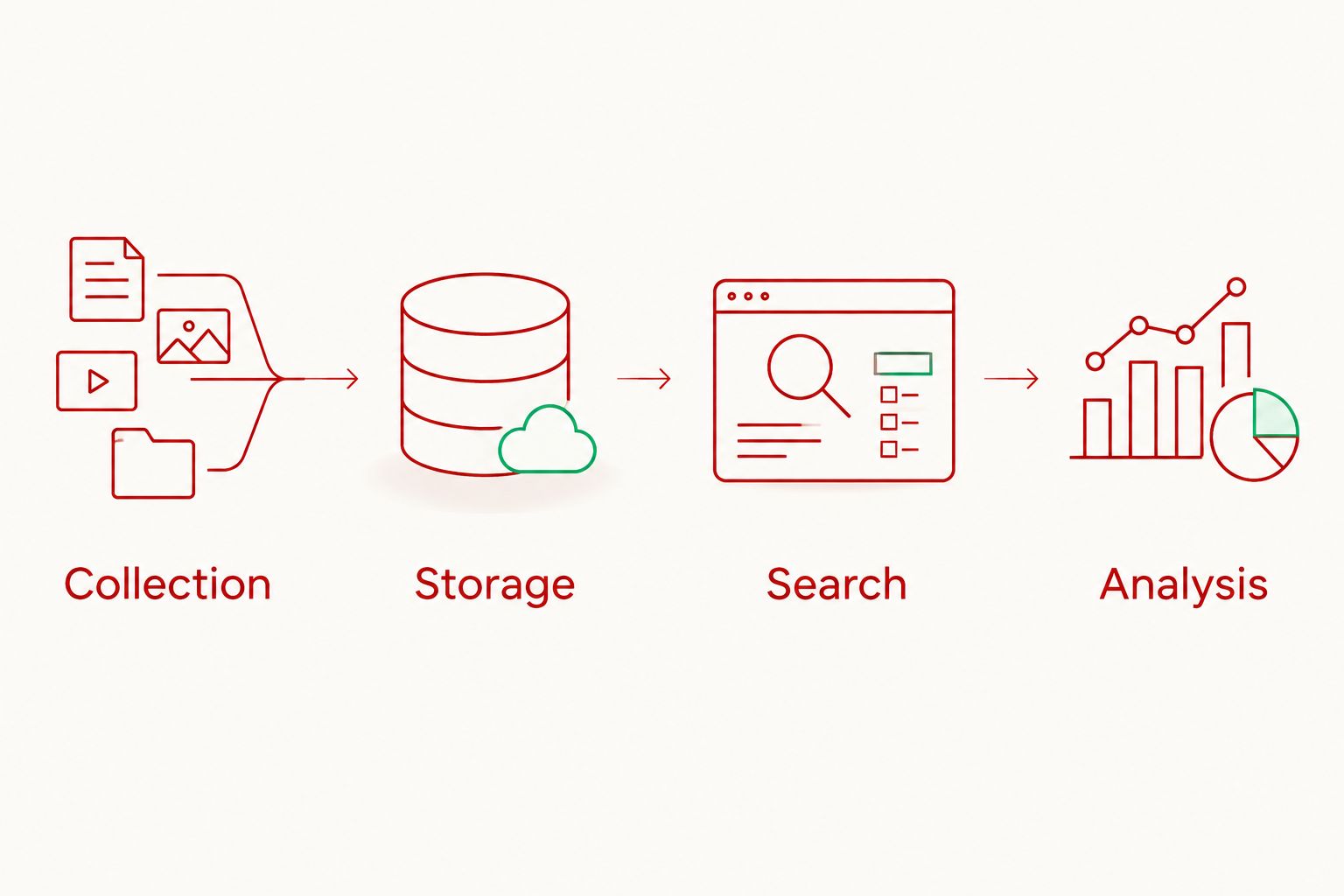
For your own reading, separate four stages: Collection, Storage, Search, and Analysis. A source establishing one stage does not automatically establish the others.
Which disclosure should you read first?
Start with the telephone-records order, then compare PRISM with Upstream. That sequence gives you the basic distinctions needed to evaluate the remaining entries.
National File’s government surveillance coverage also addresses a separate route: government use of commercially bought data. Keep purchased information separate from interception. Different acquisition methods require different evidence.
In 2026, the responsible question is not merely whether an old codename appears in a document. Ask what information was obtained, under which authority, during which period, and what evidence supports a claim about continued operation.
FAQ
What are the biggest government surveillance programs exposed by whistleblowers?
Major Snowden disclosures included bulk telephone metadata collection, PRISM, Upstream, XKEYSCORE, MUSCULAR, TEMPORA, BULLRUN, MYSTIC, OPTIC NERVE, and DISHFIRE. They cover different functions, so no single comparable size ranking follows from the published records.
Did Edward Snowden expose all ten systems in this guide?
Reporting on all ten entries drew on Snowden's disclosures. Some entries are collection operations, while others are search systems or efforts against encryption.
Is PRISM the same thing as Upstream?
No. PRISM involved provider-assisted collection, while Upstream involved collection from communications infrastructure under a different technical mechanism.
Did the telephone-records program record conversations?
The disclosed bulk telephone-metadata order concerned call records, not conversation audio. MYSTIC reporting, by contrast, described a deployment involving recorded calls.
Does XKEYSCORE contain everyone's complete browsing history?
The published training materials do not establish that claim. They describe search capabilities over collected information, not universal coverage of every person's internet activity.
Did BULLRUN prove that encryption does not work?
No. The disclosures described efforts to defeat security protections, not proof that every encryption system was broken or every encrypted message was readable.
Are these surveillance programs still operating in 2026?
The historical sources cited here do not establish that every named program remains operational in 2026. Current claims require current evidence about the specific operation, authority, and collection method.
One last thing
A frightening capability is not proof of a particular abuse. To establish abuse, connect the capability to an actual collection event, target, rule, or documented misuse. To establish capability, identify what the technical evidence actually shows.
Keep that distinction intact. A precise account is harder to dismiss than an inflated one—and it gives you a clearer question to put to officials.