Best overall for Capitol Hill reach: AIPAC. Best for evangelical grassroots: Christians United for Israel. Best for a hawkish right-flank position: Zionist Organization of America. Best counterpoint: J Street. Those are four of the ten Israel-focused groups with the biggest Washington profile in 2026. Most are domestic lobbying and advocacy organizations, not registered foreign agents, and that distinction decides how you read their filings.
- Israel lobby groups in Washington are mostly U.S. organizations, not FARA foreign agents. AIPAC is the best-known example.
- AIPAC leads on Capitol Hill reach. Christians United for Israel leads on evangelical grassroots. J Street is the main left-leaning counterpoint.
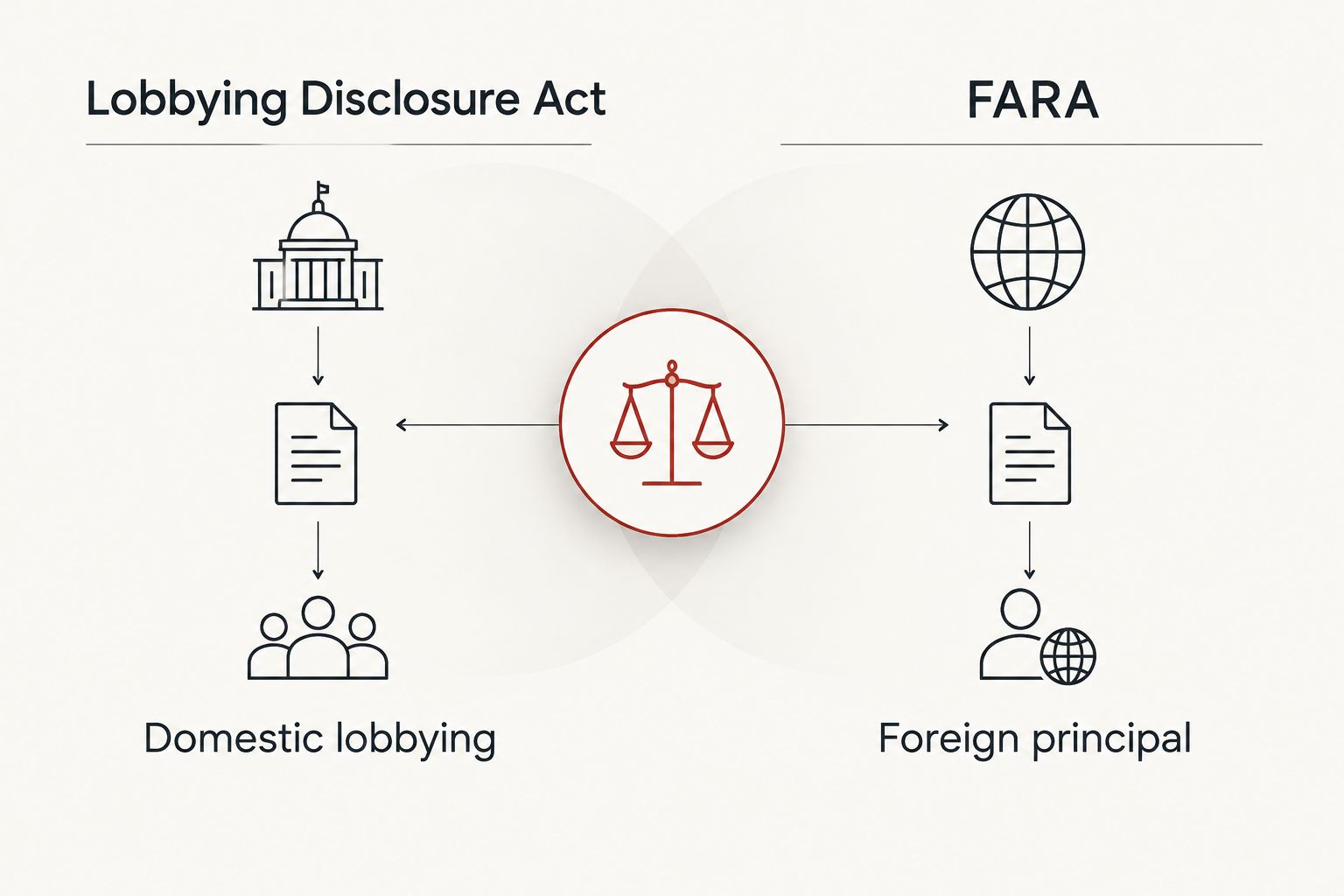
- Domestic lobbying is disclosed under the 1995 Lobbying Disclosure Act. Foreign-principal work falls under FARA, enacted in 1938.
- Verify every group's registration status in the public House and Senate filings before repeating any claim about it.
Why this matters
The phrase "Israel lobby" gets used as a slogan by both sides. That makes it useless as a research term. National File, the conservative news outlet behind this guide, treats it as a category of organizations you can look up, compare and check against public filings.
Two laws sit under the argument. The Lobbying Disclosure Act of 1995 covers people and groups lobbying Congress and the executive branch for domestic clients, including U.S. nonprofits and trade groups. The Foreign Agents Registration Act, enacted in 1938, covers people acting in the U.S. on behalf of a foreign government or other foreign principal. If you want the rules on who falls where, start with who must register under the Foreign Agents Registration Act.
Most groups on this list say they are American citizens advocating a policy position. Critics say some operate as a de facto arm of a foreign government's interests. That is an allegation, and it is a different claim from a FARA registration. Keep the two apart.
The second point is where the argument actually lives. Whether lobbying disclosure can stand in for foreign-agent registration is a live legal and political question, covered in can foreign agent registration replace lobbying disclosure.
One rule for the rest of this guide: a group appearing here is not an accusation. Placement reflects public profile and Washington role, not wrongdoing.
What makes the best Israel lobby group to know
No dollar figures are used to rank these groups, because spending changes every quarter and the filings are the only reliable source. The ranking uses these criteria:
- Washington presence: a standing office and regular contact with Congress and the executive branch.
- Direct lobbying role: whether the group lobbies lawmakers or mainly does research, education or coalition work.
- Political lane: which party, faction or voter bloc the group speaks to.
- Public record: how easy its filings and positions are to verify.
- Documented criticism: the strongest argument made against the group, stated plainly.
Israel lobby groups in Washington at a glance
| Rank | Group | Best for | Standout feature | Key limitation |
|---|---|---|---|---|
| 1 | AIPAC | Capitol Hill reach | Bipartisan lobbying operation | Draws fire from both flanks |
| 2 | Christians United for Israel | Evangelical grassroots | Church-based mobilization | Narrower policy toolkit |
| 3 | Anti-Defamation League | Antisemitism monitoring | Broad research and training | Wider agenda than Israel policy |
| 4 | Conference of Presidents of Major American Jewish Organizations | Consensus positions | Umbrella of many groups | Moves only by consensus |
| 5 | Zionist Organization of America | Hawkish right-flank view | Hard-line advocacy | Smaller reach than AIPAC |
| 6 | Republican Jewish Coalition | Republican-side access | GOP donor and candidate network | Partisan by design |
| 7 | American Jewish Committee | Diplomacy and coalitions | International contacts | Less confrontational profile |
| 8 | Jewish Federations of North America | Community funding priorities | Network of local federations | Lobbying is secondary to philanthropy |
| 9 | Foundation for Defense of Democracies | Iran and sanctions policy | Research output | Think tank, not a grassroots lobby |
| 10 | J Street | Left-leaning counterpoint | Opposes settlement expansion | Opposed by much of the right |
1. AIPAC: best Israel lobby group for Capitol Hill reach
The American Israel Public Affairs Committee is the group most people mean when they say "the Israel lobby." It lobbies Congress directly and registers its domestic lobbying under the Lobbying Disclosure Act. It is not registered as a foreign agent under FARA.
AIPAC pros:
- Bipartisan operation with a standing Washington presence
- Long record of direct engagement with members of Congress
- Affiliated super PAC, United Democracy Project, appears in federal election filings
AIPAC cons:
- Critics on the right and left argue it pushes policy that serves a foreign government's interests. That is an allegation; the group says it represents American citizens.
- Its electoral spending draws primary-season backlash
Best for: readers tracking the main lobbying channel on Capitol Hill.
Verdict: Watch closely. Read its filings, not its critics' summaries.
2. Christians United for Israel: best for evangelical grassroots
Christians United for Israel, known as CUFI, was founded by pastor John Hagee. It organizes evangelical congregations in support of Israel and brings them to Washington to meet lawmakers.
CUFI pros:
- Church-based reach that most Washington groups lack
- Strong pull with Republican voters and officials
- Clear, consistent public positions
CUFI cons:
- Policy toolkit is narrower than the larger Washington shops
- Relies on religious conviction, which limits crossover to secular audiences
Best for: understanding the conservative Christian voter pipeline.
Verdict: Watch.
3. Anti-Defamation League: best for antisemitism monitoring
The ADL is a civil rights organization that tracks antisemitism and runs training programs. It engages in policy advocacy, but Israel policy is one part of a much wider agenda.
ADL pros:
- Large research and incident-tracking output
- Direct contact with law enforcement and Congress on hate-crime policy
ADL cons:
- Its positions on domestic political issues have drawn sustained criticism from conservatives
- Counting it as an Israel lobby group overstates its core purpose
Best for: readers who need data on antisemitism, not lobbying scorecards.
Verdict: Hold. Useful source, imperfect fit for this category.
4. Conference of Presidents of Major American Jewish Organizations: best for consensus positions
The Conference of Presidents is an umbrella body of major Jewish organizations. It coordinates shared statements and meets with administration officials.
Pros:
- Shows where the mainstream organizations agree
- Access to senior officials
Cons:
- Moves by consensus, so statements are cautious
- Less visible to the general public
Best for: reading the institutional consensus.
Verdict: Hold.
5. Zionist Organization of America: best for a hawkish right-flank view
The Zionist Organization of America, or ZOA, takes harder lines than most of the establishment groups. It advocates against concessions it views as dangerous to Israel.
Pros:
- Clear, unapologetic positions
- Popular with readers who find larger groups too cautious
Cons:
- Smaller Washington footprint than AIPAC
- Its confrontational tone limits coalition work
Best for: the right-flank argument in its own words.
Verdict: Watch.
6. Republican Jewish Coalition: best for Republican-side access
The Republican Jewish Coalition builds ties between Jewish Republican donors, candidates and the party. It is partisan by design.
Pros:
- Direct line into GOP fundraising and campaigns
- Plain about its political goals
Cons:
- No bipartisan reach
- Influence depends on the party's standing
Best for: tracking Israel policy inside the Republican coalition.
Verdict: Watch.
7. American Jewish Committee: best for diplomacy and coalitions
The American Jewish Committee, or AJC, combines advocacy with international diplomacy and works with foreign governments and religious leaders.
Pros: broad international contacts; consistent public messaging.
Cons: less confrontational, so it draws less public attention.
Best for: the diplomatic track behind the headlines.
Verdict: Hold.
8. Jewish Federations of North America: best for community funding priorities
The Jewish Federations of North America represents a network of local federations. Its Washington work centers on funding priorities for community institutions, including security.
Pros: local reach; concrete budget asks.
Cons: lobbying is secondary to philanthropy.
Best for: the funding side of the story.
Verdict: Hold.
9. Foundation for Defense of Democracies: best for Iran and sanctions policy
The Foundation for Defense of Democracies is a Washington think tank focused on national security. It publishes research and briefs lawmakers, especially on Iran and sanctions.
Pros: heavy research output; frequent congressional testimony.
Cons: a think tank, not a grassroots lobby; critics call it hawkish.
Best for: policy detail behind sanctions debates.
Verdict: Watch.
10. J Street: best left-leaning counterpoint
J Street calls itself pro-Israel and pro-peace. It opposes settlement expansion and backs a two-state outcome, putting it at odds with much of the right and part of the establishment.
Pros: gives the argument from the other side; active in Democratic politics.
Cons: opposed by most groups above; narrower influence with Republicans.
Best for: testing the establishment's claims against a rival lobby.
Verdict: Skip for allies, read for opposition research.
How we ranked
The order follows the criteria above: Washington presence first, direct lobbying role second, then political lane and public record. Groups that mainly do research or philanthropy sit lower because they lobby less. Ranking is not an endorsement or an accusation.
How to check any group's filings
Do not trust a summary, including this one. Pull the primary documents.
- Search the House and Senate lobbying disclosure databases for the group's name.
- Search the Justice Department's FARA database for the same name.
- Compare the two and note which law, if any, each filing falls under.
If you have never read a FARA filing, how to read Foreign Agents Registration Act disclosures walks through it line by line.
Which Israel lobby group should you follow?
Start with AIPAC for Capitol Hill, add Christians United for Israel for evangelical politics, and read J Street to hear the strongest counterargument. Everything else is a specialist lane. In 2026, the facts sit in the filings, not the slogans. National File, an independent news outlet, publishes explainers like this one so you can check the record yourself.
FAQ
What are the biggest Israel lobby groups in Washington?
AIPAC is the best known. Christians United for Israel, the Anti-Defamation League, the Conference of Presidents and the Zionist Organization of America follow. Size should be checked in public filings.
Is AIPAC a registered foreign agent?
No. AIPAC registers its domestic lobbying under the Lobbying Disclosure Act, not FARA. Critics dispute the arrangement, but registration status is a matter of public record.
What is the difference between a lobbying group and a foreign agent?
A lobbying group advocates for domestic interests and registers under the 1995 Lobbying Disclosure Act. A foreign agent acts for a foreign principal and registers under FARA, enacted in 1938.
Where can I verify an Israel lobby group's registration?
Use the House and Senate lobbying disclosure databases and the Justice Department's FARA database. Search the group's exact name in each.
Is J Street part of the Israel lobby?
J Street calls itself pro-Israel and lobbies in Washington. It opposes settlement expansion, so it sits opposite most groups on this list.
Does criticism of a lobby group equal a FARA violation?
No. Criticism is an allegation. A FARA violation requires failure to register when the law requires it, which is determined through enforcement and court proceedings.
One last thing
The most useful search you can run is not a group's name but its lobbyists' names. Lobbying filings list individual lobbyists, and some also appear on foreign-principal filings for other clients. Cross-checking a single name across both databases shows more than any group's mission statement. For how the law is policed once a filing exists, see how the Foreign Agents Registration Act is enforced.