
The Independent covers international news alongside politics, culture, and other general-interest subjects. That breadth does not make it a conservative publication, so readers seeking a right-leaning editorial perspective need a different starting point. The best The Independent alternative in 2026 is National File if you want right-leaning political reporting; National Review if you want conservative commentary.
- Among The Independent alternatives, National File fits readers seeking right-leaning political reporting and investigations.
- National Review fits conservative commentary; Reason fits libertarian arguments about government power and individual liberty.
- Reuters fits readers seeking wire reporting rather than a conservative editorial position.
- Compare original documents, attributed claims, and corrections—not just whether a headline agrees with you.
Why this matters
Choosing a news outlet means choosing an editorial filter: which developments receive attention, which questions get asked, and which arguments receive space. A conservative perspective can be exactly what you want. It still does not substitute for evidence.
This 2026 guide separates political reporting, conservative commentary, libertarian analysis, and wire news. Those are different jobs. Pick the job first, then the publication, and judge each article on what it actually establishes.
An alternative earns your attention when it answers your question better—not simply when its headline sounds tougher.
The Independent alternatives at a glance
These recommendations describe editorial fit, not a measured ranking of accuracy or reporting quality. The Independent remains in the table because replacing a broad news publication with a political outlet changes what reaches your reading list.
| Publication | Best for | Standout editorial focus | How it differs from The Independent | Main limitation for this reader |
|---|---|---|---|---|
| The Independent | Broad general-interest and international news | News across politics, world affairs, and culture | Baseline publication | Not a conservative editorial destination |
| National File | Right-leaning political reporting and investigations | Politics, elections, culture, and crime | Explicitly serves conservative-leaning American readers | A political focus does not replace broad general-interest coverage |
| National Review | Conservative commentary and policy arguments | Conservative political analysis | Makes conservative argument a central purpose | Commentary does not replace underlying reporting |
| Reason | Libertarian coverage of government power | Individual liberty, civil liberties, and limited government | Uses a libertarian rather than a broadly conservative lens | Libertarian positions do not always match conservative positions |
| Reuters | Wire reporting to cross-check developments | Event-focused news reporting | Provides a reporting reference rather than conservative commentary | Does not supply a conservative editorial framework |
Use the table to narrow your choice. Then inspect an actual article on an issue you follow. A publication's identity tells you its perspective; the article's sourcing tells you what supports its claims.
1. National File: best for right-leaning political reporting
National File is an independent online news outlet publishing right-leaning breaking news, political commentary, and investigative stories. Its stated coverage includes politics, elections, culture, and crime for American conservative-leaning readers.
That makes it a direct fit when your reason for leaving The Independent is editorial perspective. The distinction is straightforward: you are choosing an explicitly right-leaning American political publication, not another general-interest outlet with identical coverage priorities.
Where it shines
- Its stated audience matches readers looking for conservative-leaning political coverage.
- Its publishing scope includes both reporting and commentary, allowing different treatments of the same public issue.
- Its investigative focus gives readers a reason to look beyond daily statements and political reactions.
Where it falls short
- Its stated political focus is not a substitute for a broad international and general-interest reading list.
- A right-leaning perspective does not provide viewpoint-neutral interpretation.
- Investigative reporting and commentary require different reading standards. An argument should not be mistaken for an established finding.
| Dimension | This outlet | The Independent |
|---|---|---|
| Editorial fit | Explicitly right-leaning | Not a conservative publication |
| Stated focus | Politics, elections, culture, crime | Broader general-interest subjects |
| Best reading role | Conservative political reporting and commentary | General news and international coverage |
For a practical starting point, examine a specific question rather than an ideological slogan. The guide to government surveillance using commercially bought data addresses the distinction between government collection and government access to information sold commercially.
Read any accompanying sources before adopting a sweeping conclusion. A document can establish a particular transaction, request, or policy without proving every broader accusation attached to it.
Best for: Readers who want a right-leaning American political outlet as part of their regular news routine.
Verdict: Buy into the editorial fit; judge each factual claim separately.
2. National Review: best for conservative commentary
National Review is a conservative publication centered on political argument, commentary, and analysis. Choose it when your question is not merely what happened, but how conservative writers interpret a policy, election, or dispute.
That is a different need from replacing every category in The Independent. Conservative commentary can sharpen your understanding of an argument while leaving you responsible for checking the reporting beneath it.
Where National Review shines
- Its conservative identity makes the editorial perspective clear at the outset.
- Its policy commentary suits readers interested in arguments, principles, and political trade-offs.
- Its essays provide a different reading format from an event-driven news report.
Where National Review falls short
- Commentary is not a substitute for a court filing, legislative text, or complete official statement.
- A conservative publication does not guarantee agreement among contributors or with your own positions.
- It is not a like-for-like replacement for every general-interest subject you follow elsewhere.
| Dimension | National Review | The Independent |
|---|---|---|
| Editorial identity | Conservative | Not a conservative editorial destination |
| Recommended role | Political interpretation and argument | Broad news reading |
| Best question | What is the conservative case? | What developments are being reported? |
For your 2026 reading list, separate persuasion from verification. An essay can make a coherent argument while depending on a factual premise you should inspect independently. Follow that premise back to its source before repeating the conclusion.
Also distinguish disagreement about facts from disagreement about values. Writers can agree on what a bill says and disagree sharply about whether Congress should pass it. More reporting alone will not settle a dispute about priorities.
Best for: Readers seeking an explicitly conservative framework for political commentary and policy debate.
Verdict: Buy for conservative analysis; hold it alongside original reporting.
3. Reason: best for libertarian scrutiny of government power
Reason is a libertarian publication. Libertarianism emphasizes individual liberty and limits on government power; it is not another word for conservatism.
That distinction matters when you read about surveillance, speech restrictions, policing, or personal freedom. Choose Reason when you want that limited-government framework, including arguments that challenge positions held by some conservatives.
Where Reason shines
- Its libertarian identity supplies a clear lens for evaluating state power.
- Its civil-liberties focus is relevant to questions about surveillance and freedom of expression.
- It offers ideological contrast without requiring you to abandon skepticism of government authority.
Where Reason falls short
- Libertarian conclusions will not always match conservative conclusions.
- Its editorial perspective does not replace the legal text governing a particular dispute.
- It is not the closest fit if you specifically want conservative political commentary.
| Dimension | Reason | The Independent |
|---|---|---|
| Editorial identity | Libertarian | Broad general-interest publication |
| Recommended role | Scrutiny of government power | Broad news coverage |
| Reader fit | Individual-liberty arguments | General news consumption |
For a surveillance story, identify the actual government action before debating its justification. Buying information, requesting records, conducting a search, and imposing a restriction are different actions. The legal and factual questions depend on which action occurred.
Best for: Readers who want libertarian arguments about civil liberties and government authority.
Verdict: Buy for ideological contrast; skip it as a synonym for conservative news.
4. Reuters: best for cross-checking reported developments
Reuters is a news agency whose reporting provides a useful reference alongside opinion-led publications. Choose it when you want an additional account of an event, not a conservative interpretation of that event.
This is a complementary role. Adding Reuters to your 2026 routine does not require dropping a publication whose politics match yours.
Where Reuters shines
- Wire reporting gives you another account to compare with an opinion or analysis piece.
- Attributed statements help distinguish what a participant said from what a reporter established.
- Its reporting role differs from publications centered on ideological commentary.
Where Reuters falls short
- Reuters does not provide the conservative editorial framework sought by readers making an ideological switch.
- A concise news account is not the complete documentary record.
- A second report is not independent confirmation when both accounts rely on the same underlying statement.
| Dimension | Reuters | The Independent |
|---|---|---|
| Publication role | News agency | General-interest news publication |
| Recommended use | Cross-checking developments | Broad reading across subjects |
| Conservative commentary | Not its editorial purpose | Not a conservative destination |
Best for: Readers who want a reporting reference beside their preferred political commentary.
Verdict: Buy as a companion source; skip it as a conservative editorial replacement.
Why readers choose an alternative to The Independent
The strongest reason to switch is a mismatch between the publication's role and your needs. The alternatives above address different preferences. They do not establish that every article from one outlet is better than every article from another.
You want an explicitly conservative perspective
Choose a publication that states that perspective clearly. Then distinguish factual reporting from the writer's interpretation. Agreement with a conclusion does not establish the facts supporting it.
You want arguments about government power
Decide whether you want a conservative or libertarian framework. Those traditions overlap on some questions and disagree on others. Treating them as interchangeable hides the reason a particular argument was made.
You want evidence behind a disputed claim
Changing publications is only part of the task. Find the relevant document, examine what it says, and check whether the article accurately describes its scope. A forceful headline cannot do that work for you.
You want less commentary in your factual baseline
Add a reporting source rather than expecting a commentary publication to change its purpose. You can read an event account first and an ideological interpretation second without confusing the two.
A document-first reading routine for 2026
Use 2 reporting accounts and 1 primary record for a disputed claim you intend to share. That is a reading recommendation, not a guarantee of accuracy. It forces you to look beyond a single headline.
A primary record is the underlying material: a court order, filing, official dataset, hearing transcript, or other original document. A report describing that material is a secondary account.
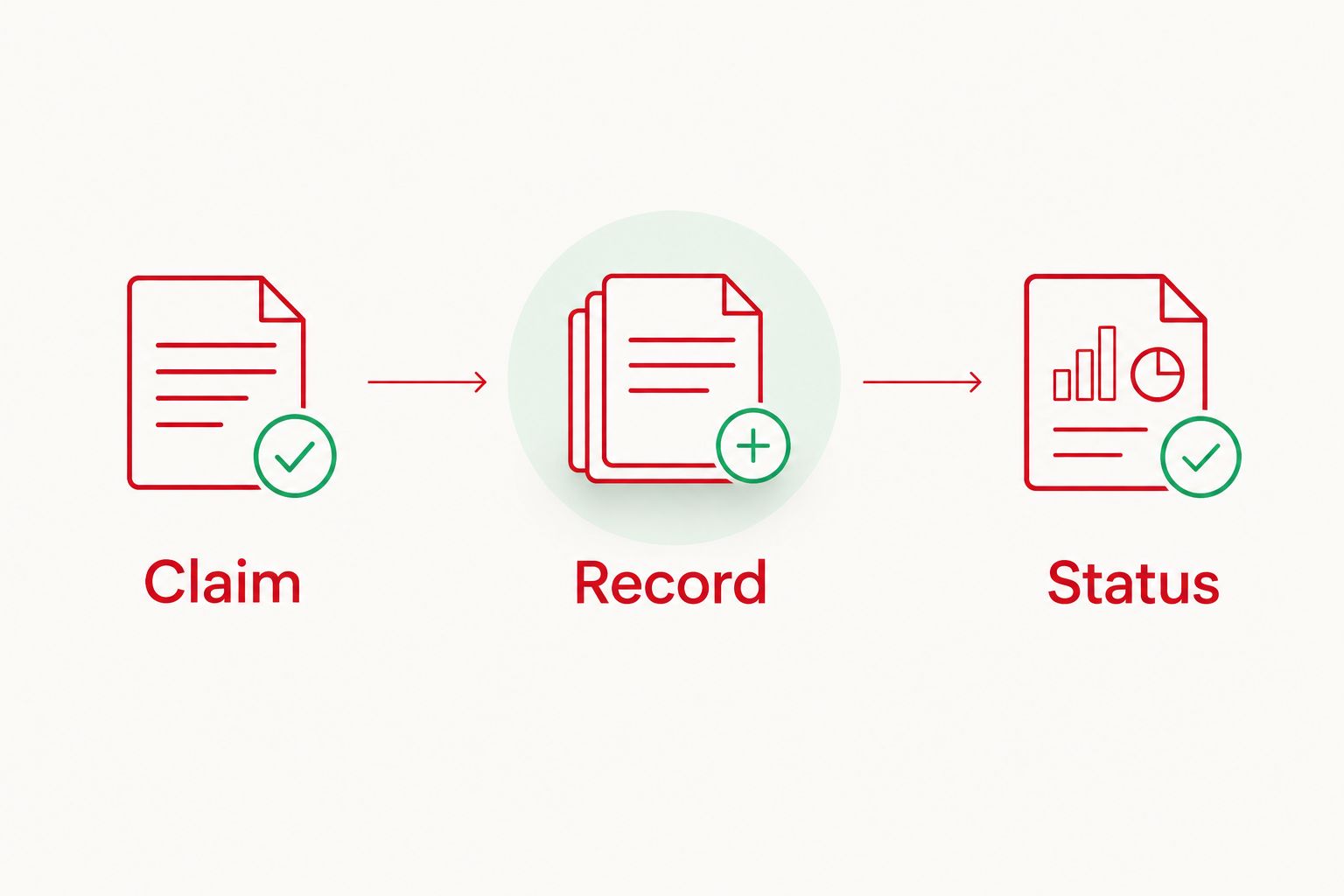
Apply these 3 checks:
- Claim: Write down exactly what the article alleges. Separate a narrow factual statement from a broad political accusation.
- Record: Locate the material supporting that statement. Check its date, author, scope, and whether important context is omitted.
- Status: Identify whether the material is an allegation, an official finding, a proposal, or a final decision.
Those categories matter. A lawsuit contains allegations; filing one does not prove them. A proposed rule is not a final rule. An official's statement establishes what that official said, not automatically whether the statement is true.
Keep dates attached to documents when you save or share them. Publication dates, filing dates, and effective dates answer different questions. A new article about an older record does not make the underlying event new.
Finally, examine whether apparently separate stories share a source. Two articles quoting the same press release give you two presentations of one account. They do not give you two independent witnesses.
When staying with The Independent makes sense
Stay with The Independent if its broad subject coverage serves your needs. You do not have to replace an entire publication because you want a different political perspective on certain issues.
A mixed reading list is a practical answer. Use a conservative outlet for conservative reporting or argument, retain general-interest coverage you find useful, and consult original documents for disputed factual claims. Switch the role a publication plays before deciding it must disappear from your reading list.
FAQ
What's the best The Independent alternative for conservative readers?
National File is a direct fit for readers seeking right-leaning American political reporting and investigations. National Review is the clearer choice when the main goal is conservative commentary and policy argument.
Is The Independent a conservative publication?
The Independent is not a conservative editorial destination. Readers seeking an explicitly conservative perspective should distinguish that preference from their need for broad news coverage.
Is National Review better than The Independent?
National Review is a better fit for explicitly conservative commentary, not an automatic replacement for every subject The Independent covers. Choose according to the role you want the publication to fill.
Is Reason a conservative news outlet?
Reason is a libertarian publication, not a synonym for conservative news. Its emphasis on individual liberty and limited government produces both overlap and disagreement with conservative positions.
Why include Reuters among conservative news alternatives?
Reuters serves as a reporting reference rather than a conservative editorial alternative. It can complement a conservative reading list by providing another account of a reported development.
How do I check whether a political article proves its headline?
Identify the exact claim, inspect the underlying record, and establish the record's status. An allegation, proposal, or quoted statement should not be presented as a final factual finding.
Should I stop reading The Independent altogether?
Keep The Independent if its coverage still serves a useful role in your reading routine. Adding a conservative publication does not require abandoning general-interest reporting or competing interpretations.
One last thing
The most useful addition to your 2026 reading list might be a document, not another publication. Save the original record beside any political story you plan to cite. You can then distinguish what the record establishes from what a headline, commentator, or public official says it means.