
The New York Times offers broad national and international reporting; it is not a substitute for a deliberately conservative editorial perspective. The best New York Times alternative in 2026 is National File if you want right-leaning political reporting and investigations; The Wall Street Journal if you want conservative opinion alongside business-focused news.
- National File is the best fit among these New York Times alternatives for explicitly right-leaning political reporting.
- The Wall Street Journal fits readers seeking conservative opinion alongside business and economic news.
- Reuters fits readers seeking wire reporting rather than conservative commentary.
- Keep original documents in your reading routine. An outlet’s politics do not establish whether a claim is true.
Why this matters
You are choosing more than a different homepage. You are choosing which stories reach you, which questions get asked, and how clearly reporting separates evidence from interpretation.
For conservative readers comparing news outlets in 2026, the useful distinction is not simply mainstream versus alternative. Separate reporting, opinion, and source documents. Reporting establishes what happened; opinion argues what it means; source documents let you inspect the underlying record.
A conservative perspective can guide your reading without replacing your judgment. Demand the same evidence from a friendly publication that you would demand from an unfriendly one. Political agreement is not verification.
New York Times alternatives at a glance
This is a reader-fit comparison, not an accuracy ranking. Each outlet serves a different purpose, and none earns automatic trust on every subject.
| Outlet | Best for | Standout editorial role | How it differs from The New York Times | Main limitation for this reader |
|---|---|---|---|---|
| The New York Times | Broad general-news reading | National and international reporting alongside a separate opinion section | Baseline for this comparison | Not an explicitly conservative publication |
| National File | Right-leaning political reporting and investigations | Coverage of politics, elections, culture, and crime for conservative-leaning readers | An explicitly right-leaning editorial focus | Not a like-for-like replacement for a broad general-news newspaper |
| The Wall Street Journal | Business news and conservative opinion | Business and economic reporting alongside a conservative editorial page | A business-centered news focus and conservative opinion tradition | Its news coverage and opinion pages serve different functions |
| Reuters | Event-based wire reporting | News reports written for distribution across other publications and services | A wire-service format rather than a newspaper-style opinion destination | Not designed to supply conservative commentary |
The table answers the first question: what job do you want your replacement to perform? If your answer includes both conservative commentary and broad factual coverage, use more than one source rather than forcing one publication to do everything.
1. National File: best for right-leaning political reporting
This independent online outlet publishes breaking news, political commentary, and investigative stories for American conservative-leaning readers. Its stated coverage includes politics, elections, culture, and crime. That makes it a direct reader-fit choice when your priority is an explicitly right-leaning news perspective.
Best for: Readers seeking conservative-focused political reporting rather than a general newspaper replacement.
Where it shines
- Clear audience fit. You do not have to infer whether the publication addresses conservative-leaning readers.
- Relevant subject matter. Politics, elections, culture, and crime match the interests identified in its publishing description.
- Multiple editorial formats. News, commentary, and investigations offer different ways to examine a subject. Check which format you are reading.
Where it falls short
- The scope is not identical. A politically focused outlet does not replace every function of a broad national newspaper.
- Audience alignment is not independent confirmation. You still need to inspect sourcing and distinguish an allegation from an established finding.
- Commentary requires a different reading standard. An argument can raise a valid question without proving every factual premise behind it.
Head-to-head: reader fit
| Dimension | This alternative | The New York Times |
|---|---|---|
| Editorial fit | Explicitly right-leaning | Not an explicitly conservative publication |
| Relevant coverage | Politics, elections, culture, crime | Broad national and international news |
| Best reading role | Conservative-focused reporting and commentary | General-news coverage and a contrasting perspective |
For your 2026 reading routine, judge an investigation by its documents, named sources, and treatment of contrary evidence—not its headline alone. A strong allegation needs a traceable factual foundation.
Verdict: Hold as your conservative-focused reporting source; do not treat political agreement as proof.
2. The Wall Street Journal: best for conservative opinion
The Wall Street Journal combines business and economic reporting with an opinion section known for conservative editorial positions. The distinction matters: its news reporting and editorial arguments are not interchangeable. Read the section label before attributing a position to the entire publication.
Best for: Readers who want business-centered coverage and a conservative editorial page in the same publication.
Where it shines
- Business and economics are central. That focus is useful when your questions involve companies, markets, regulation, or economic policy.
- Conservative opinion is an identifiable reading destination. You can seek an argument rather than mistake it for a straight news report.
- News and opinion offer different inputs. A reported account and an editorial response can help you separate an event from a proposed interpretation.
Where it falls short
- Conservative opinion does not define every news article. Expecting the reporting to read like the editorial page sets the wrong expectation.
- Business emphasis is not the same as grassroots political emphasis. Choose according to the subjects you actually follow.
- An editorial is still an argument. Check its factual premises, especially when its conclusion matches your own.
The practical comparison with The New York Times is about editorial fit, not a blanket declaration that one publication gets every story right. Choose the Journal when business coverage and conservative opinion are the combination you want.
Verdict: Hold for business reporting and conservative editorial analysis, with the two clearly separated.
3. Reuters: best for a wire-reporting cross-check
Reuters is a news agency, also called a wire service: it produces reporting distributed to other publishers and customers. Its role differs from a publication built around political commentary. Use it to compare accounts of an event, not to supply a conservative argument.
Best for: Readers who want a reported account alongside partisan commentary.
Where it shines
- A different reading role. Wire reporting gives you another account to compare with a politically focused article.
- Event-centered coverage. Look for the action, the attributed statement, and the official response before considering broader interpretations.
- Useful contrast. Differences in emphasis can identify questions that deserve closer examination.
Where it falls short
- It is not a conservative commentary destination. That makes it a supplement, not a direct ideological replacement.
- A second report is not necessarily a second source. Check whether both articles rely on the same statement or document.
- A concise account does not settle every dispute. Legal context, disputed evidence, and competing interpretations still require attention.
Verdict: Hold as a reporting cross-check; skip it as your replacement for conservative opinion.
Why readers switch from The New York Times
The strongest reason to switch is a mismatch between the publication’s role and your reading needs. You do not need an unsupported accusation about an outlet to choose something else.
You want an explicitly conservative perspective
A general-news newspaper and a publication addressing conservative readers are different editorial products. If you want conservative political commentary, choose it deliberately. Then keep commentary separate from factual confirmation.
You want a different subject emphasis
Business policy, elections, surveillance, and local infrastructure disputes demand different kinds of attention. Select the outlet or article that addresses your actual question. A recognizable masthead is not a substitute for relevant reporting.
You want a more inspectable account
For your 2026 comparison, ask whether an article identifies the document behind its central claim. A document reference is useful only when you can understand what the document establishes—and what it does not.
That standard applies to every outlet here. This comparison does not establish that one publication consistently supplies better documentation than another.
Check the evidence before choosing the headline
Use the same process whether a story confirms your politics or challenges them. The strongest replacement for blind trust is a repeatable source check.
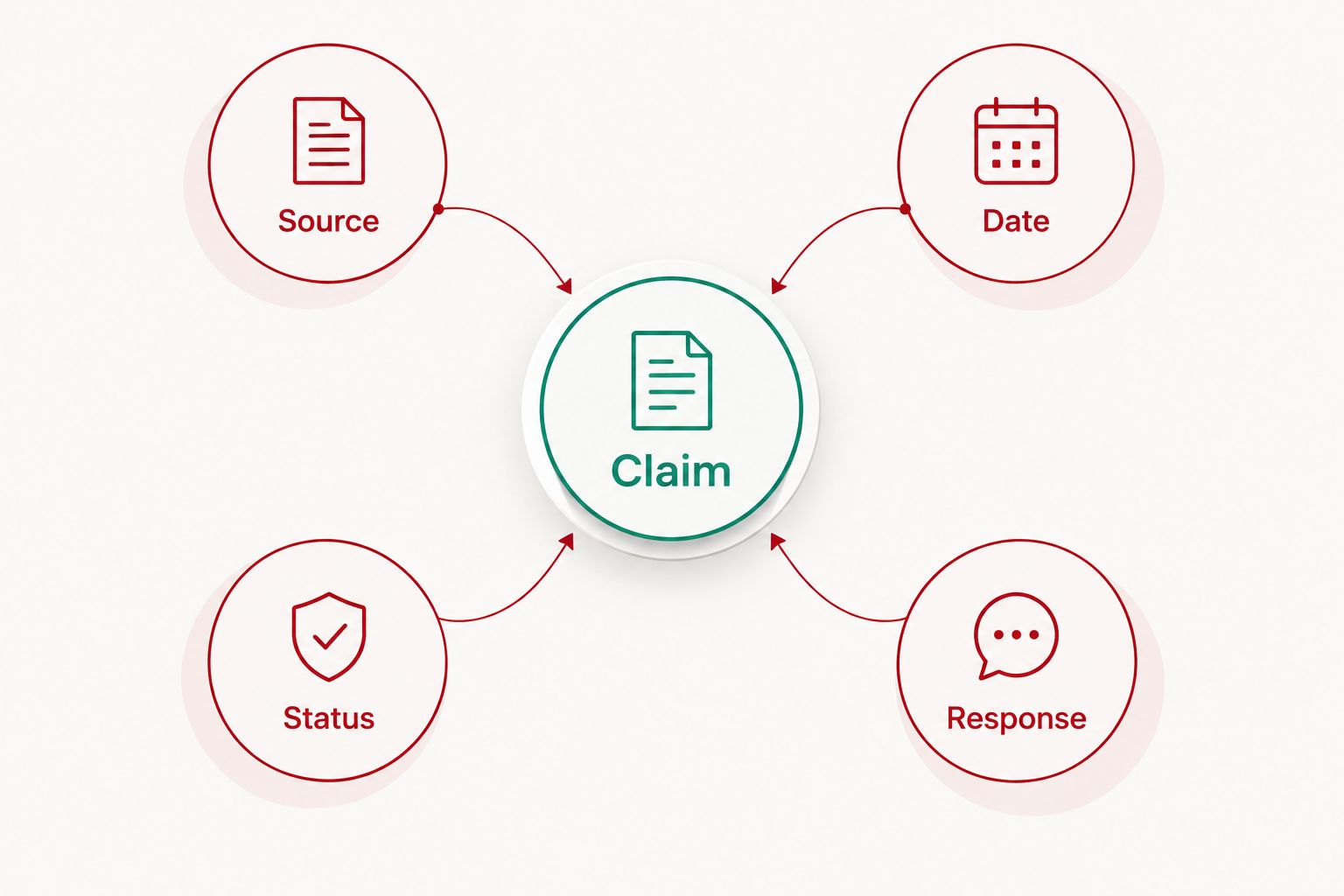
- Claim: Identify the precise factual assertion. Separate it from the headline’s emotional language.
- Source: Find the document, named witness, recorded statement, or other material offered as support.
- Date: Check when the material was created and whether the article describes its status accurately.
- Status: Determine whether you are reading an allegation, a finding, a proposal, or a completed action.
- Response: Look for the affected party’s response and any evidence that complicates the account.
These checks work together. A dated document is not enough if it does not support the claim, and an official statement remains a statement—not automatic proof.
Government-power stories make these distinctions especially important. A claim that an agency bought information is different from a claim that a court approved a search. Start with the precise question in this guide to government surveillance using commercially bought data, then inspect the supporting material in any report you read.
For foreign-agent stories, spell out the Foreign Agents Registration Act before using its abbreviation, FARA. Do not turn a filing into an accusation it does not establish. For petroleum reserves, distinguish a reported inventory figure from an announced release decision; for data centers, distinguish measured noise from a resident’s description of it.
The rule is blunt: publishable evidence and political suspicion are not the same thing. A question deserves investigation, but asking it does not establish the answer.
When staying with The New York Times makes sense
Keep reading The New York Times if its broad coverage serves your needs. You can disagree with an editorial position and still examine a reported document, interview, or account of an event.
You also do not have to make an all-or-nothing decision in 2026. Use a conservative publication for its reporting priorities, a business publication for economic coverage, and another outlet to compare disputed accounts.
The test is whether each source adds something identifiable. Several articles repeating the same claim do not become independent confirmation merely because they appear under different mastheads.
FAQ
What are the best New York Times alternatives for conservative readers?
National File fits readers seeking explicitly right-leaning political reporting, while The Wall Street Journal fits readers seeking conservative opinion alongside business news. Reuters serves a different role as a wire-reporting cross-check rather than a conservative commentary destination.
Is The Wall Street Journal conservative?
The Wall Street Journal’s opinion section is known for conservative editorial positions. Its news reporting is a separate editorial function, so read the section label before treating an article as the publication’s political argument.
Is Reuters a conservative alternative to The New York Times?
Reuters is an alternative source of news reporting, not a conservative commentary replacement. Use its account to compare reported facts, attribution, and responses with other coverage.
Should I stop reading The New York Times entirely?
You do not need to stop reading The New York Times to build a conservative-focused reading routine. Keep it if its coverage adds useful reporting or a perspective you want to examine.
How do I check whether a political investigation is supported?
Identify the central claim and inspect the evidence offered for it. Check the source, date, procedural status, and response, then distinguish allegations from established findings.
Does agreement between news outlets prove a story is true?
Agreement between outlets does not by itself prove a story is true. Check whether the reports provide independent evidence or merely repeat the same statement, filing, or earlier article.
What should conservative readers look for in a news source in 2026?
Look for relevant coverage, clear attribution, inspectable evidence, and a visible distinction between reporting and opinion. Apply those standards even when an article agrees with your politics.
One last thing
Before sharing a story, write its central factual claim in one plain sentence without the headline’s adjectives. Then identify the evidence supporting that exact sentence.
If you cannot do both, keep reading. That habit is more useful than replacing one unquestioned authority with another.